There are two questions I'd ask before recommending any electric van. How far does it actually need to travel in a day, and what does it need to carry? Ford's Transit City looks particularly interesting when you start with those questions, rather than comparing it with every electric van on sale by battery capacity alone.
This first-look assessment is based on Ford's published specifications and European launch material. The Transit City joins the wider Transit family as a dedicated electric van for businesses operating predominantly in towns and cities, with deliveries expected from early 2027.
Design and body styles
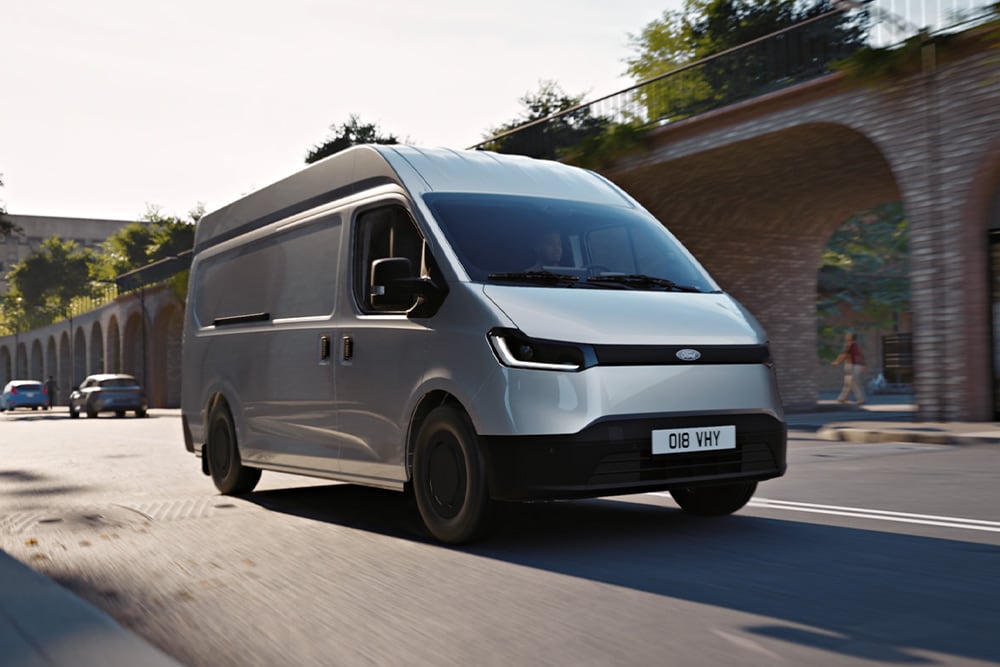
The clean front end, slim lighting and largely closed grille give the Transit City a rather different appearance from the traditional diesel Transit. I like the simple shape; a working vehicle doesn't need to look like a spaceship to make the point that it's electric. More important is the choice between the low-roof L1H1, the longer, taller L2H2 and the chassis cab.
The shorter version is under two metres tall, which makes it worth considering if your work involves height-restricted car parks. Always check the exact clearance and any roof-mounted equipment before entering. The taller version is the one I'd look at for bulky deliveries, whereas the chassis cab opens up the possibility of specialist equipment and bodywork.
Load space and payload
| Panel van | L1H1 | L2H2 |
|---|---|---|
| Load volume | 6.4m³ | 8.5m³ |
| Maximum gross payload | 1,085kg | 1,275kg |
| Maximum load length | 2,770mm | 3,070mm |
Both panel vans accommodate three Euro pallets according to Ford, which is useful for businesses switching from conventional vans. Remember that payload is not simply the weight of whatever you put in the back. Occupants, additional equipment and conversions affect the usable allowance, so check the precise vehicle specification if you regularly carry heavy tools or materials.
Ford's ready-made box van and dropside conversions are another reason to consider the chassis cab. For a business buying several vehicles, having the conversion and vehicle supplied together could simplify procurement and warranty administration.
Interior and driver equipment
Ford has chosen a single equipment specification with a 12-inch touchscreen, Apple CarPlay and Android Auto, keyless start and a heated driver's seat. The latter might sound like a luxury until you imagine a courier climbing back into a cold van after every delivery on a wet February morning.
Parking sensors, a rear camera and adaptive cruise control are among the standard driver assistance features. The useful question for a working driver is how easy all of that is to operate repeatedly throughout a shift. I'd want to assess seat comfort, storage for paperwork and drinks, visibility and how straightforward the controls are to use before giving the cabin a final verdict.
Battery, range and charging
A 56kWh lithium iron phosphate battery powers a front-mounted 110kW motor. Ford quotes a maximum speed of 120km/h, or roughly 75mph, which is adequate for occasional motorway work. The combined WLTP range is up to 158 miles; the separate city test produces a higher figure of around 236 miles. Neither figure is a promise of real-world range, particularly with a heavy load or in cold weather.
Maximum charging power is 87kW on a suitable DC charger, with Ford estimating around 33 minutes for a 10 to 80% top-up. An 11kW AC supply can charge from 10 to 100% in about five and a half hours. Businesses with a lower-powered charging point should allow more time.
Personally, I'd work backwards from the longest regular route, factoring in winter, unexpected jobs and how much energy the van needs to get back to base. If that still leaves a comfortable reserve, the smaller battery could make excellent commercial sense. If you are stopping to charge during a paid shift most days, it is time to look at a different vehicle.
UK price and alternatives
Ford UK advertises the short-wheelbase van from £24,000 excluding VAT, and separately advertises a £5,000 grant saving for eligible vehicles. Check the current price list and whether your quote already includes any grant before comparing figures; conversion costs and finance terms will also affect the final bill.
I'd compare it with the Ford E-Transit Custom and alternatives such as the Vauxhall Vivaro Electric and Renault Trafic E-Tech electric. Look at like-for-like body sizes and actual delivered prices, not simply the cheapest advertised monthly payment. The right alternative depends on whether your priority is carrying capacity, longer-distance range or access to servicing.
My verdict
I like the thinking behind the Transit City. In an industry where a bigger battery often gets the headlines, there is something refreshing about Ford designing a van around the mileage many businesses really cover. A business that can charge overnight and has a reasonably predictable working day should put it on the shortlist.
The final judgement will depend on real-world efficiency, comfort with a full load and the ownership costs businesses can actually achieve. Those are particularly important for operators who rely on their vans to earn a living, and I wouldn't assign a road-test score from specifications alone.
Specifications and launch information: Ford Pro European media launch and Ford UK. Photograph: Ford UK.