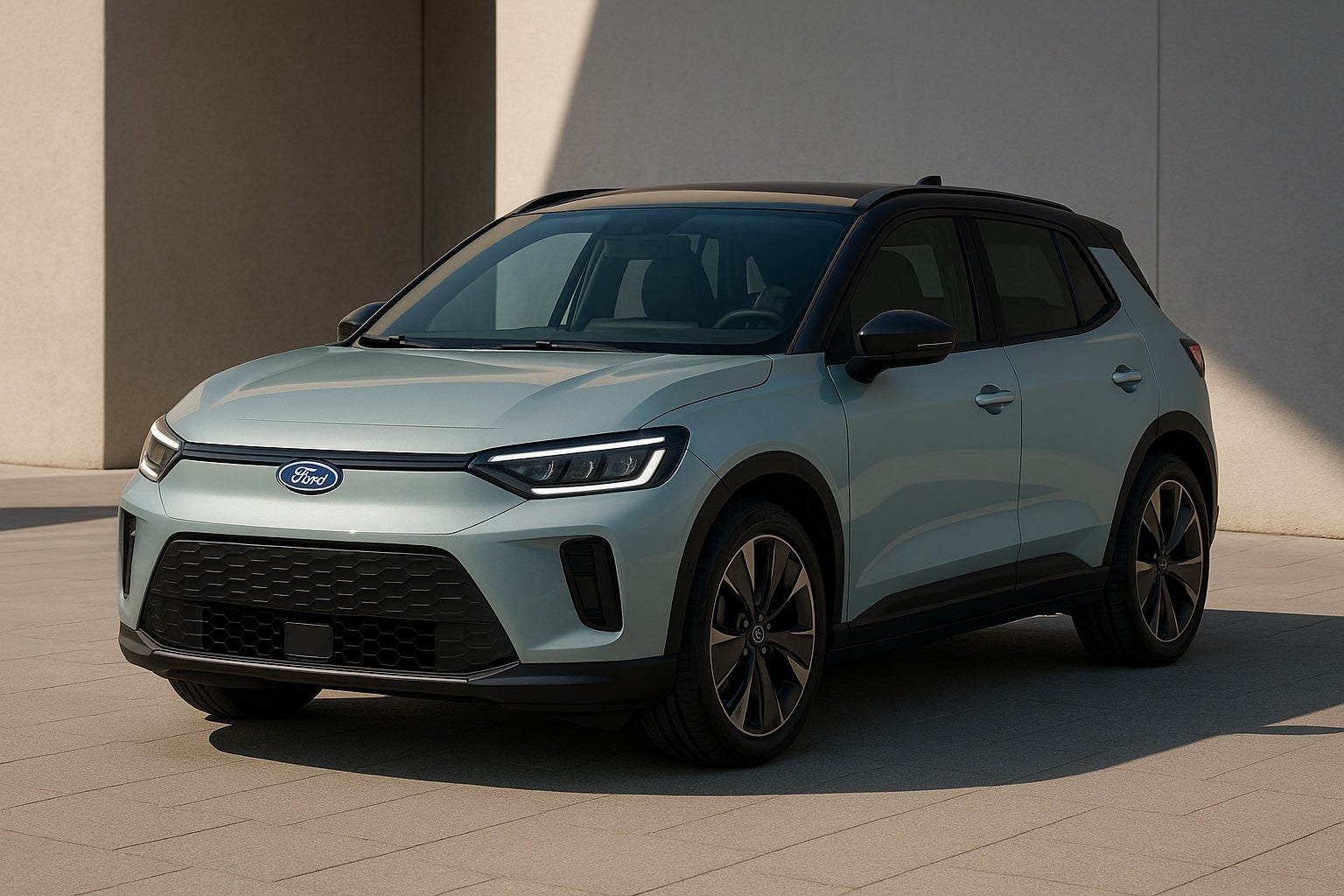
Is the Ford Puma Gen-E a good everyday electric car?
The updated Puma Gen-E makes a convincing case for buyers who want a compact EV with useful storage rather than a large SUV. The 2026 battery update improves its official range. Check the exact model year: early launch cars and the current specification do not have the same usable battery capacity.
For me, this is the interesting end of the electric-car market. A car that is easy to fit into everyday life has more value than one with a headline acceleration figure you use twice. The Puma's job is shopping, commuting, school bags and the occasional longer trip. It needs to do those well.
Which battery and range figure should you use?
Ford's August 2026 UK price guide, labelled MY27, lists 46.8kWh usable capacity. Select is rated at 259 miles WLTP combined; Premium, Black Edition and BlueCruise Edition are listed at 251 miles. Older launch information describes a different battery specification.
That makes a stock-car comparison more important than usual. Ask for the model year and usable battery capacity in writing. A discount on an earlier car might still be attractive, but compare it as an earlier car rather than expecting every figure from the latest brochure.
The longest official range also belongs to the entry version here. Spending more does not automatically buy more distance. I would see that as a useful reminder to choose equipment deliberately.
How quickly can it charge?
The current UK guide gives a maximum DC rate of 100kW and an official 10–80% time of 26 minutes. The same guide quotes 168PS, 290Nm and 0–62mph in eight seconds. Those numbers describe a practical everyday EV rather than a performance special.
For longer trips, compare the charging stop as part of the whole journey. A higher peak rate elsewhere is not automatically useful if it is sustained only briefly. For daily use, the more important question is whether you can charge conveniently while the car is parked.
Why is the storage worth a closer look?
Ford uses the GigaBox underfloor storage area to make more of the space available. That is a useful idea because family luggage rarely arrives as a neat collection of identical boxes. Somewhere for muddy equipment or awkward shopping can matter more than another decorative feature.
I would check how you reach that lower space when the main boot is already full. Also try the rear seats with the front seat set for the tallest regular driver. Clever storage does not remove the need to make sure the passengers fit.
Which version would I choose?
The current price guide lists Select at £29,995 OTR before any applicable grant or offer. I would start there, then add up the equipment differences rather than jump straight to a special edition. The photograph shows Black Edition, whose styling and specification differ.
BlueCruise is a separate buying decision. It is a supervised driver-assistance feature for designated roads, not permission to stop paying attention. Check hardware, activation and any ongoing terms for the exact car. If most of your travel is local, it may be less valuable than equipment you use every morning.
What should you compare it with?
The Renault 4 E-Tech is relevant for compact electric practicality. The Kia EV3 offers another family-EV route, while the BYD Dolphin Surf is worth considering if a smaller car can do the job.
What is my verdict?
The Puma Gen-E's appeal is the combination of manageable size and thoughtful storage. The battery update strengthens that proposition without changing the basic brief.
I would shortlist Select first, check the actual car's model year and make sure the seating and boot work for the household. Buy the more expensive trim because it gives you something useful, not because the cheapest version must somehow be incomplete.
Sources and author
By Ben Freakley. Editorial assessment using Ford's UK price guide, effective 5 August 2026, 2026 update details and UK model information. Checked 21 October 2026. Official Ford Black Edition photograph. More Ford coverage.