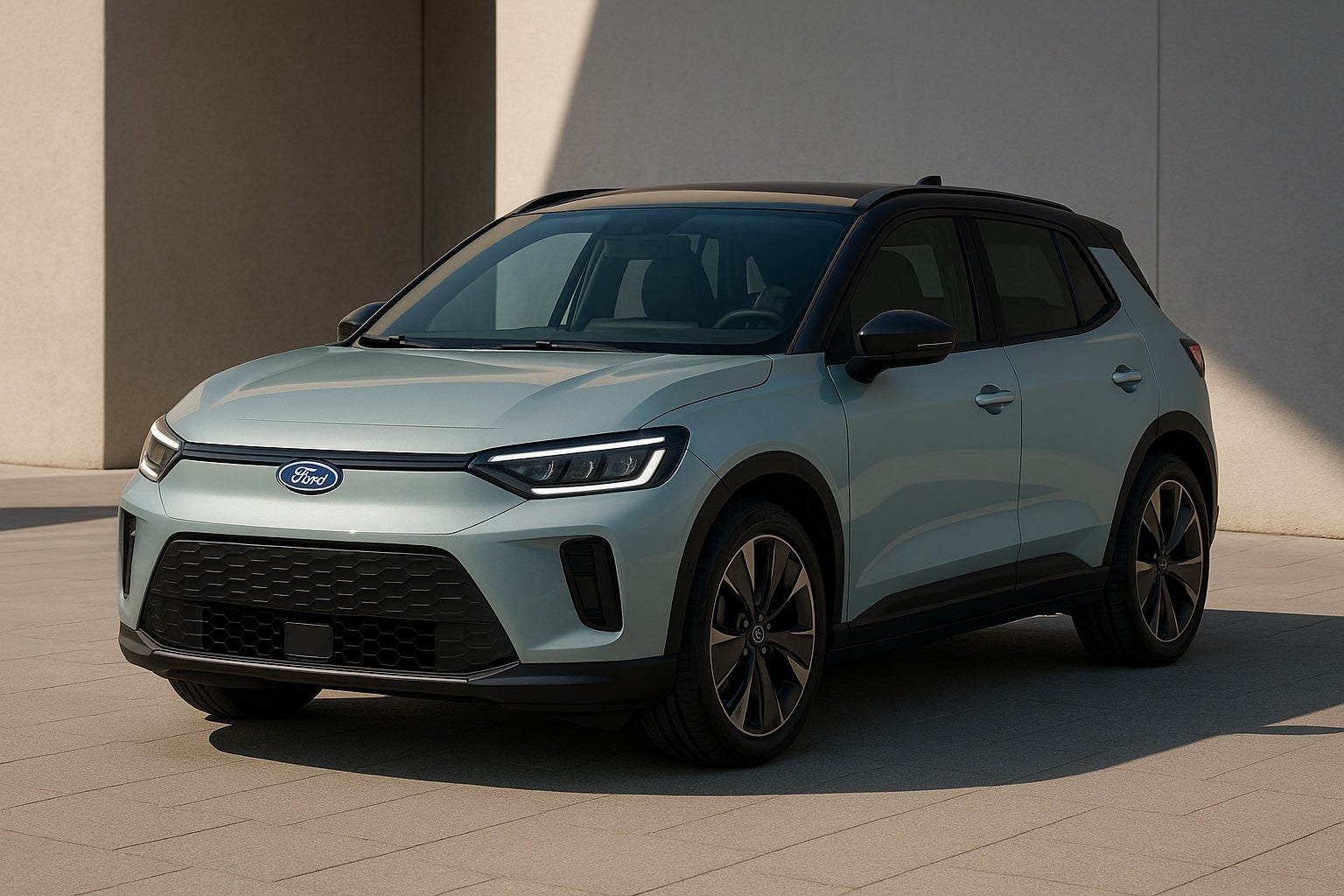
The electric Ford Capri makes far more sense once you stop expecting it to recreate the old two-door coupe. As a modern family EV it has plenty going for it, with up to 390 miles of official range, 286PS in rear-wheel-drive form and a large 572-litre boot, although the famous name inevitably raises expectations beyond what the car was ever designed to meet.
The debate around the badge is unavoidable, but I think it is more useful to judge the car Ford has actually built. This Capri is lower and sleeker than the Explorer, but it is still a five-door electric family car with proper rear seats, a large luggage area and enough range to work as an only car. Once you approach it on those terms, the proposition becomes much easier to understand.
Design and first impressions
The Capri has a more fastback-like shape than the Explorer and carries its weight lower visually, which gives it a cleaner and slightly sportier stance without turning it into a true coupe. The full-width lighting, smooth nose and relatively simple surfaces give it a distinct identity, while the basic proportions remain practical enough for family use.
I think the styling works best when you separate it from the history lesson. It is not a retro exercise, and Ford has made no serious attempt to imitate the old Capri beyond the name. That will frustrate some enthusiasts, but it also means the car is free to be designed around modern EV packaging rather than nostalgia.
Inside the cabin
The cabin shares a lot with the Explorer, including the adjustable central touchscreen and hidden storage behind it, but the overall presentation feels a little more style-led. There is still plenty of practical thinking, including useful centre-console storage and a layout that feels much more family-focused than the exterior might suggest.
The MEB platform beneath the car means some Volkswagen Group switchgear is familiar, but I would rather Ford concentrate on making the interface easy to live with than pretend the shared engineering does not exist. The important question is whether the controls, storage and seating work for you day after day.
Space and practicality
Ford quotes 572 litres of luggage space to the seatback, up to 627 litres when loaded to the roof and 1,510 litres with the rear seats folded. Those are strong figures for a car with a more coupe-like profile, and they make the Capri much easier to justify as a family vehicle than the styling alone might suggest.
The sloping rear body is still something I would check with taller passengers because fastback shapes always ask a question somewhere. If rear headroom or maximum box-like practicality matters more than styling, the Explorer is the more obvious Ford. If the Capri gives you enough space, the sleeker body becomes a genuine point of difference.
Range, battery and charging
The launch Extended Range rear-wheel-drive Capri used a 77kWh usable battery and Ford's European technical data quoted up to around 390 miles WLTP. That is a very strong number and, for me, one of the car's best arguments.
I would choose the rear-wheel-drive car partly because of that range advantage. The launch AWD version was quicker and charged faster, but the extra performance is not something most family buyers need every day. The RWD car's original 135kW rapid-charging peak was acceptable rather than exceptional, although later specifications improved the hardware.
That model-year distinction matters if you are buying used or comparing stock, because not every Capri has identical charging performance. The live lease page is therefore more useful for today's buying decision than assuming the 2024 launch specification still defines the range.
Performance and road character
The 286PS rear-wheel-drive version produces 545Nm and reaches 62mph in 6.4 seconds, which is comfortably quick enough. The AWD car cuts that further, but I would struggle to justify paying more simply for a faster acceleration figure in a family EV of this size.
I have not driven this particular Capri, so I would not pretend to give you a first-hand handling verdict. The independent launch consensus was that the car is smooth, secure and easy to drive rather than genuinely sporty, which is probably the biggest disconnect with the badge. I would judge the ride, steering and brake feel on ordinary roads, not against a romantic memory of what an old Capri represented.
Pricing and which version makes sense
Order books opened with the Extended Range rear-wheel-drive Select at £48,075, rising above £56,000 for the launch AWD Premium. That made the car expensive enough that the closely related Explorer became an unavoidable comparison.
I would start with the RWD Extended Range car because it combines the best official range with more than enough performance. The Capri's styling and larger boot then have to justify the premium over the Explorer rather than simply relying on the name.
Leasing and alternatives
The Ford Explorer EV should be the first comparison because it shares much of the same underlying engineering. The CUPRA Tavascan offers another design-led take on MEB hardware, while the Polestar 4 is worth considering if you want a more premium electric fastback.
Verdict
The electric Capri is not the car many enthusiasts imagined when Ford revived the name, but dismissing it for that reason overlooks a genuinely capable family EV. The rear-wheel-drive launch car's 390-mile range, strong performance and large boot are exactly the qualities that matter to somebody replacing a petrol or diesel family car.
I would choose the Extended Range RWD, compare the live Rivervale lease against the Explorer and decide whether the Capri's styling is worth the difference. The badge may start the argument, but range, space and price should finish it.