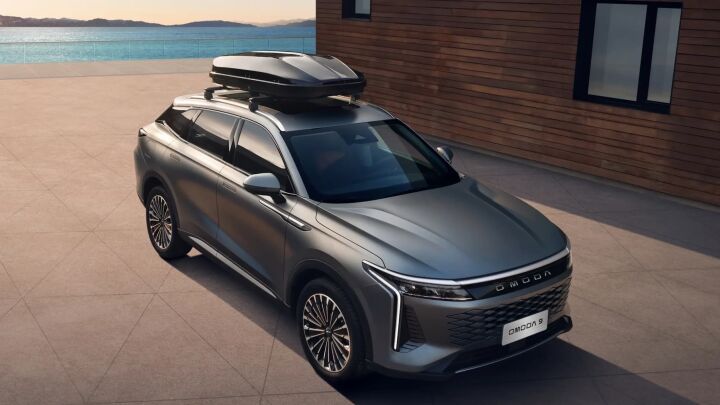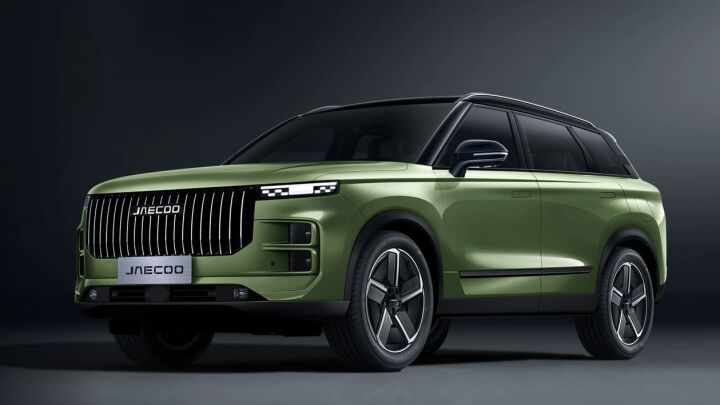
The Jaecoo 7 SHS is one of those cars that makes a lot of sense on paper.
It’s a plug-in hybrid SUV with a claimed electric range of up to 56 miles, a long total driving range, a premium-looking cabin, lots of technology, and a price that undercuts plenty of established rivals.
If I told you this SUV could manage close to 50 miles on electric power in winter, average around 55mpg over mixed driving, and come with kit like a head-up display, cooled wireless charging, a panoramic roof, heated and ventilated seats, and a huge portrait touchscreen, you’d probably expect it to be wearing a German badge and costing quite a bit more.
But this is the Jaecoo 7 Luxury 1.5 SHS.
And after spending around 600 miles with it, including local driving, motorway runs and a four-hour journey, I’ve come away with a more mixed view than I expected.
There are things I genuinely appreciated. The efficiency was strong, the styling is smart, the ride height is great, and the long range makes it feel easy to live with. But there were also areas where the car didn’t really suit me, particularly the ride comfort at speed, seat comfort over long distances, the way it behaved in corners, and a few technology and climate control quirks.
So this isn’t going to be one of those reviews where I pretend everything is brilliant just because the spec sheet looks impressive. It also isn’t a hatchet job. The Jaecoo 7 SHS will suit some people very well. It just wasn’t a car I personally loved after living with it properly.
Quick take
The Jaecoo 7 SHS is a plug-in hybrid SUV that delivers impressive fuel economy, a strong electric range and a big list of standard kit for the money.
In my time with it, I saw around 48 miles of electric range in cold weather and averaged around 55mpg across mixed driving. That is genuinely impressive for a family-sized SUV.
However, after 600 miles, I found the ride at speed too bouncy, the seats uncomfortable on longer journeys, and the handling less confidence-inspiring than rivals such as the Kia Sportage. I also experienced some screen glitches and inconsistent climate control behaviour.
It’s a car worth considering if your priorities are value, efficiency, styling and equipment. But I’d strongly recommend a proper extended test drive before buying or leasing one.
Key figures
- Model tested: Jaecoo 7 Luxury 1.5 SHS
- Power: 204 PS
- Torque: 310 Nm
- 0 to 62 mph: 8.5 seconds
- Top speed: 112 mph
- Claimed electric range: 56 miles
- Real-world electric range seen: 48 miles in cold weather
- Real-world fuel economy seen: around 55mpg
- Boot space: 500 litres
- Seats: 5
- Braked towing capacity: 1,500kg
Design and styling
I think the Jaecoo 7 is a good-looking SUV.
It has a confident, squared-off shape, a bold front grille, slim LED lighting and enough road presence to make people ask what it is. That is still quite useful for a new brand trying to establish itself in the UK.
From the front, it looks more premium than the price might suggest. The grille gives it a strong identity, and the upright stance gives it that chunky SUV feel a lot of buyers want.
Down the side, you get flush door handles that pop out as you approach the car, 19-inch alloy wheels, and a clean profile that avoids looking too fussy. Around the back, the full-width lighting gives it a modern look.
It’s a car that looks smart without trying too hard. In darker colours especially, it has a more expensive look than you might expect.
There is a rugged theme to the Jaecoo 7 as well. It has 200mm of ground clearance and a claimed 600mm wading depth, so while I wouldn’t suggest treating it like a hardcore off-roader, that extra ride height is useful in real UK driving.
Think potholes, speed bumps, rough lanes, steep driveways and flooded roads after heavy rain. That’s where this kind of SUV setup makes sense.
Cabin and first impressions
Inside, the Jaecoo 7 makes a strong first impression.
The cabin is clean, modern and very screen-led. There aren’t loads of physical buttons, which won’t suit everyone, but visually it feels very current.
The Luxury model gets a large 14.8-inch portrait touchscreen, a digital driver display and a head-up display. It also comes with plenty of comfort features, including heated front seats, ventilated front seats, a heated steering wheel, wireless phone charging and a panoramic sunroof.
For the money, the amount of kit is hard to ignore.
The materials look good, the driving position is nice and high, and the cabin has that “big car” feel that SUV buyers tend to like. It feels airy, helped by the glass roof, and there’s enough space up front to feel comfortable in day-to-day use.
I also liked the general sense of visibility. You sit high, you get a good view out, and that makes it easy to place around town.
Infotainment and technology
The main screen is large, sharp and generally responsive. It looks impressive and gives the interior a very tech-heavy feel.
Apple CarPlay works well, although the climate controls can initially seem like they disappear when CarPlay is open. You can swipe up from the bottom of the screen to bring the climate bar back, but it isn’t immediately obvious the first time you use it.
The 50W wireless charging pad is a nice touch, especially because it is cooled. That matters because some wireless chargers in cars basically turn your phone into a small oven. This one does a much better job.
The head-up display is also a strong feature at this price point. It’s clear in daylight and useful once you’ve got it set up how you like it.
That said, over my 600 miles, the technology didn’t feel completely polished.
I noticed a few odd screen glitches. One of the main ones was the braking distance setting, where the early and normal settings would highlight rapidly in succession, almost as if the system was flicking between options.
I also found the heated seat and heated steering wheel menu a bit confusing. You can turn them on, exit the menu, then go back in and it looks like they’re off, even though the seat is still getting hotter and hotter.
None of this stopped the car working, but it made the interface feel a little less finished than the cabin design suggests.
The 540-degree camera
On paper, the 540-degree camera system sounds brilliant.
You get multiple angles, including a transparent chassis-style view, which is designed to help with tight spaces, kerbs, ramps and awkward manoeuvres.
In practice, I found it a bit disorientating.
There is a lot happening on screen, and sometimes I found it harder to judge distance quickly than I would with a simpler, more natural camera setup. Some drivers will absolutely love it, especially if they enjoy having every possible view available.
Personally, I found it a bit too busy.
It’s clever technology, but it’s one of those features I’d recommend trying properly on a test drive rather than assuming it will automatically make parking easier.
Space and practicality
As a family SUV, the Jaecoo 7 does a decent job.
There are five seats, a 500-litre boot and a useful 1,500kg braked towing capacity. That means it should suit everyday family use, dog owners, holidays, weekly shops and the usual “I’m only taking a small bag” weekends that somehow turn into half the house being loaded into the boot.
Rear space is decent, and the higher SUV shape makes getting in and out easy. The boot is a useful size, although not very competitive, and there’s enough practicality here for most buyers looking at this type of car.
The fuel tank is 60 litres, which helps with the overall range. Combined with the plug-in hybrid setup, it gives the Jaecoo 7 SHS a very useful long-distance ability from an efficiency point of view.
Plug-in hybrid system and real-world efficiency
This is one of the strongest parts of the Jaecoo 7 SHS.
The plug-in hybrid system combines a 1.5-litre turbo petrol engine with an electric motor and battery. The official electric range is 56 miles, and in cold weather I managed around 48 miles on electric power while driving locally around Brighton and testing different settings.
That’s a good result.
It means a lot of people could use this car like an EV for much of the week, especially if they can charge at home or at work. Local commuting, school runs, shopping, gym trips and general day-to-day driving could be done mostly on electric power.
Across my longer test period, I averaged around 55mpg, which I thought was impressive for an SUV of this size.
This is where the Jaecoo 7 makes a lot of sense. If you’re coming from a petrol or diesel SUV and want to reduce fuel use without going fully electric, the SHS system gives you a strong bridge between the two.
The petrol engine is quiet most of the time, and the transition between electric and petrol power is usually smooth. It doesn’t feel like an old-school hybrid that keeps interrupting the drive. Most of the time, it just gets on with the job quietly.
Performance
With 204 PS and 310 Nm of torque, the Jaecoo 7 SHS isn’t a sporty SUV, but it has enough power for normal driving.
The 0 to 62 mph time is 8.5 seconds, which is perfectly respectable for this kind of car. It feels responsive at lower speeds because the electric motor helps with that initial pull away.
Around town, it’s easy. Pulling out of junctions is smooth, and you don’t feel like you’re waiting for the petrol engine to wake up.
On faster roads, it has enough performance for overtaking and joining motorways, although it doesn’t feel especially exciting. That’s fine. This is a comfort and efficiency-focused SUV rather than something pretending to be a hot hatch on stilts.
Gear selector response
One small but regular annoyance was the gear selector.
It can feel a little unresponsive when switching between Drive and Reverse. That matters most when you’re trying to do a quick parking manoeuvre or turn around in a tight space.
You select the gear, but the car doesn’t always feel like it has responded as quickly as you’d expect.
It’s not a dealbreaker, but it is one of those little things that can become irritating in daily use.
Ride comfort and motorway driving
This is where my view of the Jaecoo 7 changed the most after spending more time with it.
At lower speeds, it’s fine. Around town, the light steering, high driving position and smooth hybrid system make it easy to drive.
But at speed, I found the ride quite bouncy.
On motorways and faster A-roads, the car didn’t feel as settled or planted as I’d like. It could feel busy underneath you, and it didn’t have that calm, composed motorway feel you get from some of the more established rivals.
I also found it wandered a bit at higher speeds, which meant I had to concentrate more to keep it tracking cleanly in a straight line.
That might not bother everyone, but over a longer journey it became tiring.
Handling and cornering
The Jaecoo 7 SHS is not a car that enjoys being pushed.
The steering is light, which makes it easy around town, but at speed I wanted more weight and more confidence. In corners, the car doesn’t feel especially planted, and if you carry a bit of speed it can feel unsettled.
Compared with something like a Kia Sportage, I didn’t think it handled as well. The Sportage feels more composed, more predictable and generally more confidence-inspiring when the road gets twisty.
That doesn’t mean the Jaecoo is unsafe or unusable. It just means it feels more at home being driven gently and steadily.
If you want a relaxed SUV and you’re not interested in driving quickly through corners, you may not care. But if you value body control and a planted feel, this is something to pay attention to on a test drive.
Passenger comfort
This was one of the more surprising parts of my time with the car.
My passengers felt travel sick at anything over around 40mph, especially on faster, bendier roads. That may not happen to everyone, and travel sickness can be very personal, but it happened consistently enough for me to mention.
I think it links back to the bouncy ride and the way the car moves at speed.
For a family SUV, passenger comfort matters. If you regularly carry children, friends, family or anyone prone to travel sickness, I’d suggest taking passengers with you on the test drive.
Don’t just drive it around a retail park at 30mph. Get it onto faster roads and see how everyone feels.
Seat comfort
The seats look good and the spec sounds strong, especially in Luxury trim with heating and ventilation.
But over longer journeys, I didn’t find them comfortable.
I did a four-hour drive in the Jaecoo 7, and by the end of it I genuinely couldn’t wait to get out. I found the seat base and support didn’t work well for me over time, and the longer I spent in the car, the more uncomfortable I became.
That was probably my biggest personal issue with the car.
For shorter trips, it was fine. But if you regularly do long motorway journeys, I’d be cautious. A 20-minute test drive won’t tell you enough here.
Try to spend at least an hour in it, preferably more, before committing to buy or lease.
Climate control
The climate control system was another area where I struggled.
At times, the cabin was freezing cold. Then it would become too hot. When we finally got it comfortable, it would suddenly change again and need adjusting.
It didn’t feel consistent.
This could potentially be improved with software updates or by experimenting with settings, but during my time with the car, it was frustrating. In a modern SUV, especially one with such a tech-led cabin, you expect the climate system to just quietly do its job in the background.
In the Jaecoo 7, I found myself thinking about it far too often.
Driver assistance and safety systems
The Jaecoo 7 comes with plenty of driver assistance technology.
You get features such as adaptive cruise control, lane assistance, driver monitoring, autonomous emergency braking, collision warnings and speed limit assistance.
That’s a strong list for the money.
However, some of the systems can feel quite sensitive. Speed warnings, lane warnings and other alerts can make themselves known more often than you might like.
The good news is that you can go into the settings and adjust some of this behaviour. But it’s another area where the car feels like it needs a bit of personal setup before it becomes calmer to live with.
What I liked
Even though the Jaecoo 7 SHS wasn’t really for me, there were things I genuinely appreciated.
The fuel efficiency was impressive. Averaging around 55mpg in a family-sized SUV is a strong result, especially when you also have the benefit of proper electric-only driving for shorter trips.
The long range is useful too. It takes away the feeling that you constantly need to think about charging or fuel stops.
I liked the ride height and visibility. It gives you that SUV confidence that a lot of drivers want.
I also think the styling is strong. The Jaecoo 7 looks smart, modern and more premium than the price suggests.
And finally, the amount of equipment is hard to ignore. On spec, this car gives you a huge amount for the money.
What I didn’t get on with
The main issues for me were all things that became more obvious with time.
The ride at speed felt too bouncy.
The car didn’t feel planted enough in corners.
The seats became uncomfortable on a long drive.
The climate control was inconsistent.
The screen had some odd glitches.
The 540-degree camera was clever but disorientating.
The gear selector could be slow to respond.
And my passengers didn’t feel great in it on faster roads.
Individually, some of those things might sound minor. Together, over 600 miles, they changed how I felt about the car.
Jaecoo 7 SHS vs rivals
The Jaecoo 7 SHS sits in a very competitive part of the market.
Obvious rivals include the Kia Sportage PHEV, Hyundai Tucson Plug-in Hybrid, Toyota RAV4 Plug-in and newer plug-in hybrid SUVs from brands like Geely and BYD.
The Jaecoo’s strongest argument is value. You get lots of kit, a strong electric range and a premium-looking cabin for the money.
Where I think some rivals still have the edge is in overall polish.
The Kia Sportage, for example, feels more composed in corners and generally more settled to drive. The Hyundai Tucson has a similar family SUV appeal, while the Toyota RAV4 Plug-in has a long-standing reputation behind it.
That doesn’t mean everyone should avoid the Jaecoo. It means you should compare it properly and think carefully about the type of driving you do most often.
If most of your driving is local, steady and efficiency-focused, the Jaecoo 7 SHS could make a lot of sense.
If you regularly do long motorway trips or enjoy a more composed drive, I’d test it back-to-back with the established rivals.
Who should consider the Jaecoo 7 SHS?
You should consider the Jaecoo 7 SHS if you want:
- A plug-in hybrid SUV with a strong electric range
- Low running costs if you can charge regularly
- A high driving position
- Smart styling
- Lots of standard equipment
- A premium-looking cabin without premium-brand pricing
- A long overall driving range
It will probably suit drivers who spend most of their time doing local journeys, commuting, school runs, errands and steady longer trips.
Who might want to look elsewhere?
You might want to look elsewhere if you:
- Do a lot of motorway driving
- Need excellent long-distance seat comfort
- Want a car that feels planted and composed in corners
- Prefer physical climate controls
- Are sensitive to screen glitches or software quirks
- Regularly carry passengers who get travel sick
- Want a sharper, more confidence-inspiring drive
For me, this is where the Jaecoo 7 became harder to recommend without caveats.