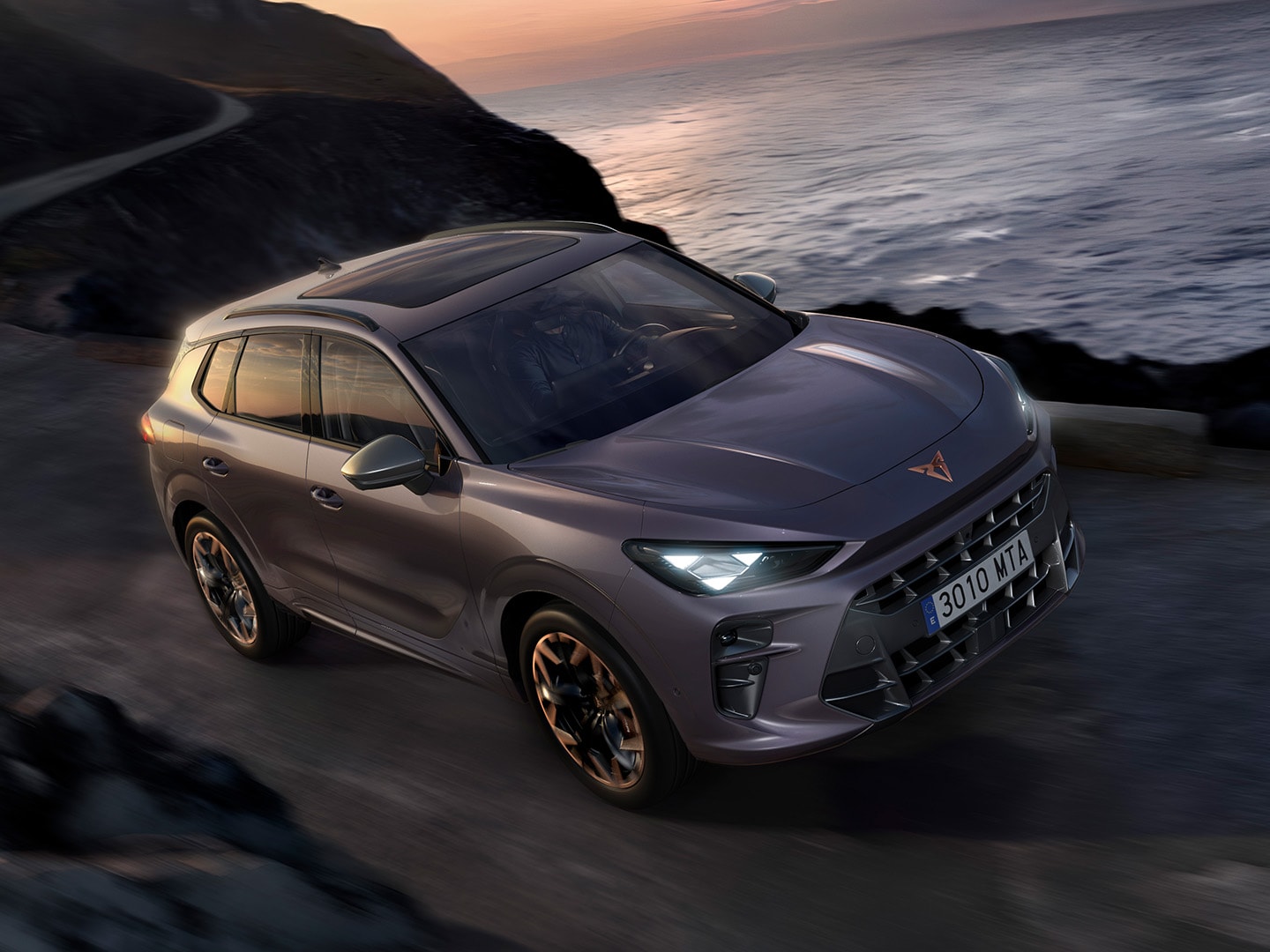
The CUPRA Terramar makes its strongest case in e-Hybrid form because the plug-in system is genuinely useful rather than simply there to improve the CO2 figure. With a 25.8kWh battery, up to 73 miles of official electric range and 50kW DC charging, it can cover a large proportion of normal weekly driving on electricity while keeping petrol flexibility for longer journeys.
The Terramar is a significant car for CUPRA because it sits right in the heart of the family-SUV market rather than occupying a niche. The styling is recognisably more aggressive than a Volkswagen Tiguan, but underneath the visual drama is a very conventional brief: five seats, an automatic gearbox, useful towing capacity and the choice between petrol and plug-in-hybrid power.
Design and first impressions
The Terramar has the sharp front-end treatment, copper detailing and sculpted bodywork that have become familiar CUPRA cues, but the overall proportions are more traditional than the Tavascan. That makes sense because this is designed to appeal to buyers who want something more distinctive than a mainstream SUV without sacrificing practicality.
At 4,519mm long and 1,863mm wide, it sits comfortably in the middle of the family-SUV class. The body is large enough to provide useful passenger room without becoming the sort of car that feels cumbersome in everyday parking spaces.
Inside the cabin
The interior carries the same design philosophy as the exterior, with a driver-focused dashboard, large central display and plenty of CUPRA-specific materials and detailing. It feels more expressive than a Tiguan without becoming as unconventional as some newer EV cabins.
I would still focus on the basics rather than the atmosphere. Seat comfort, visibility, climate controls and the behaviour of the driver-assistance systems are the things that will matter every day, and the Terramar needs to get those right before the styling becomes a genuine reason to pay more.
Space and practicality
The e-Hybrid offers around 400 litres of boot space, while petrol versions provide more because they do not need to package the large traction battery underneath the rear of the car. That is a meaningful trade-off and one I would check carefully if the car regularly carries a buggy, dog crate or bulky luggage.
There are five seats and enough space for normal family use, but the Terramar is not trying to be a seven-seat SUV. The relatively conventional roofline helps preserve rear headroom, and the overall packaging should suit households that need a practical crossover without moving into a much larger vehicle.
Electric range and charging
The 204PS V1 e-Hybrid is rated at up to 73 miles WLTP, with V2 around 72 miles depending on specification. That is a much more useful figure than the 20-to-30-mile plug-in hybrids that were common only a few years earlier because it allows many commuters to cover several days of normal travel before asking the petrol engine for help.
The Terramar can also accept up to 50kW DC charging, with CUPRA quoting around 26 minutes for a 10-to-80 per cent refill under suitable conditions. Most owners will still rely mainly on the 11kW AC setup at home or work, but the ability to rapid-charge gives the battery more flexibility during longer journeys.
Performance and road character
The 204PS e-Hybrid is the version I would start with because it already has enough performance for a family SUV, while the more powerful 272PS derivative is harder to justify unless you genuinely want the extra pace. The plug-in system is front-wheel drive and the battery adds a significant amount of weight, so outright performance is not the only part of the equation.
I have not driven this particular Terramar, so I would not turn independent launch tests into my own road verdict. The areas I would focus on are ride comfort with the larger wheels, the transition between electric and petrol power, brake feel at low speed and whether the steering feels natural rather than artificially heavy.
Towing and everyday ownership
The 204PS e-Hybrid is rated to tow up to 1,800kg braked and 750kg unbraked, which gives the Terramar a genuine family and leisure capability rather than treating the PHEV system as something designed solely around company-car tax.
Anyone towing regularly should still check the loaded trailer and vehicle payload because the plug-in car itself is close to 1.9 tonnes. A high headline towing limit is useful, but it does not remove the need to understand the actual combination.
Pricing and which version makes sense
UK order books opened in late 2024 with the range starting from £37,605, although the e-Hybrid versions sat higher than the entry petrol model. That positioned the Terramar above some mainstream SUVs but below many premium alternatives, which is broadly where CUPRA wants the brand to sit.
I would choose the 204PS e-Hybrid in a relatively modest trim if regular charging is practical. The 73-mile electric range is the feature that genuinely changes ownership, whereas paying more for the highest-output version mainly adds performance that most families will rarely use.
Leasing and alternatives
The Volkswagen Tiguan PHEV is the most obvious rational comparison because it uses related group technology with a different design philosophy. The CUPRA Tavascan is worth considering if you are ready to go fully electric, while the MG HS PHEV offers another long-electric-range plug-in proposition for less money.
Verdict
The Terramar makes the strongest argument in e-Hybrid form because the plug-in system does more than improve a tax calculation. Seventy-plus electric miles and DC charging are enough to make battery use a central part of ownership rather than an occasional novelty.
I would choose the 204PS version, keep the trim sensible and compare the live Rivervale lease against the Tiguan and other long-range PHEVs. If you can charge regularly, the Terramar gives you much of the convenience of an EV during the week without forcing you to plan every longer journey around public charging.