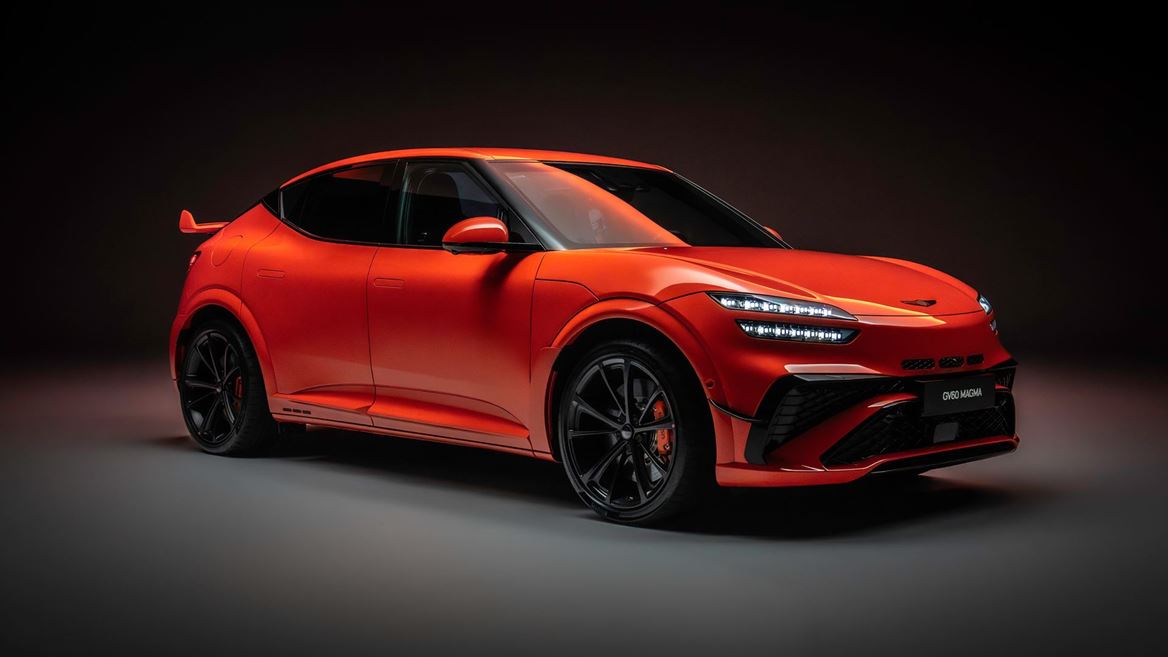
Which updated Genesis GV60 should you choose?
The rear-wheel-drive GV60 Pure is the sensible starting point if you want the updated car's larger battery and longest official range. Sport and Performance add pace and equipment, but they should earn their extra cost through features you will use.
A premium electric car needs to make ordinary journeys feel worth the premium. That does not necessarily mean being faster. A well-chosen seat, a quiet environment and controls that make sense are more useful on most days than a spectacular launch.
That is why I would begin at the bottom of the updated GV60 range rather than automatically work backwards from the Performance.
What changed in the 2025 update?
The UK update introduced an 84kWh battery across Pure, Sport and Performance, along with a new 27-inch integrated display and revised exterior details. Genesis announced UK orders in July 2025, with deliveries expected later that summer.
The distinction matters when comparing used and new stock. An earlier GV60 may be good value, but it should not be advertised in your own comparison as though it automatically has the later battery and cabin. Ask for the build specification, not just the registration year.
How much range do the different versions offer?
The UK technical guide gives 348 miles WLTP for Pure, 318 for Sport and 311 for Performance. Pure is rear-wheel drive, while the other two use all-wheel drive. These are official combined figures, not measured motorway distances.
I would treat the extra range of Pure as a useful advantage rather than a consolation for buying the entry version. If the performance already suits your needs, spending more to reduce the distance between stops may be an odd trade.
For regular long journeys, compare charging access and time as well. A large battery is only one part of an easy trip.
What should the premium cabin deliver?
The updated display gives the cabin a different focal point, but I would judge it by usability. Try route planning, phone integration and the controls used while driving. Attractive graphics do not compensate for a frequently used function that takes too much attention.
Spend time adjusting the seat and checking the view out. Test rear access with regular passengers. A compact premium SUV still needs to fit your life; paying more does not create extra space where the body does not have it.
When would Sport or Performance make sense?
Sport could be the right step if you value all-wheel drive and its particular equipment. Performance is a more deliberate purchase for someone who wants the extra capability and specification.
I would compare the actual equipment costs rather than power alone. A higher trim can be good value if it includes options you would otherwise add. It can also be an expensive way to buy a feature you enjoy occasionally.
Check local support and what the ownership package includes for the exact vehicle. Service arrangements and coverage matter more when they are clearly understood before delivery.
What are the alternatives and my verdict?
Compare the Kia EV6 for a different balance of price and electric capability, the Porsche Macan Electric for a performance-led alternative, and the Volvo EX30 if a smaller car can meet the brief.
The updated GV60 has a more useful proposition with its larger battery. My preference on paper is Pure, then a careful comparison of seating, equipment and the full quotation. Choose a faster version because you value what it adds, not because a premium car must be bought at its most expensive.
Sources and author
By Ben Freakley. Editorial assessment using Genesis' UK update announcement, UK technical guide and UK model page, checked 21 October 2026. Official Genesis image. More Genesis coverage.