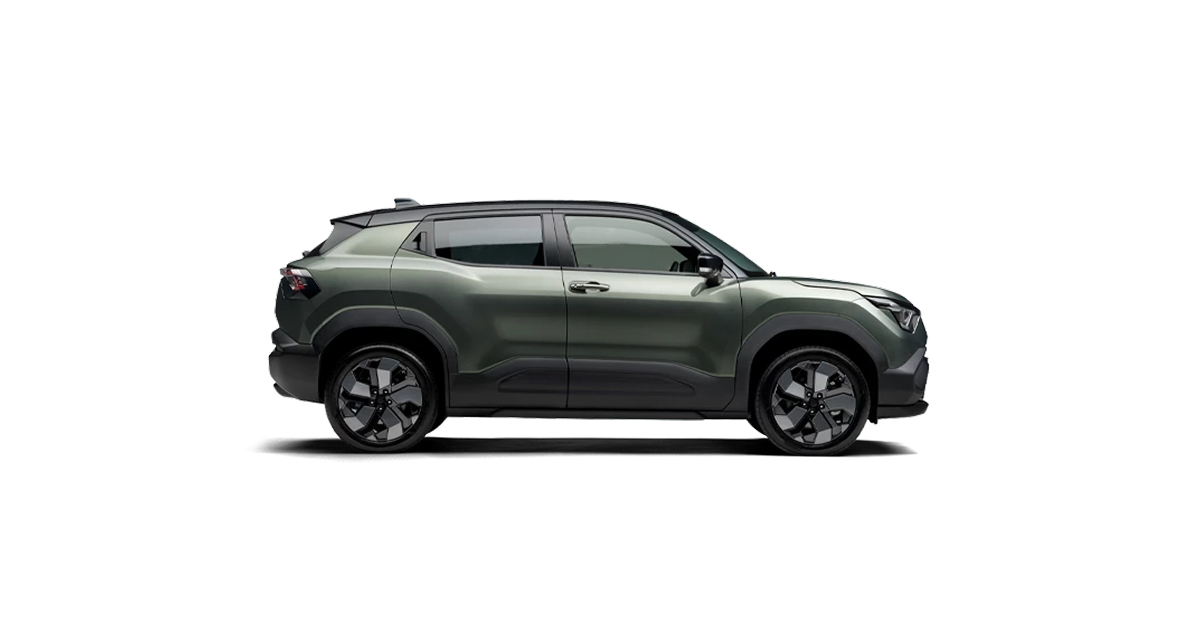
Which Suzuki e Vitara makes the most sense?
The two-wheel-drive e Vitara is the sensible starting point for normal road use. Choose the larger battery if regular journeys justify it, and ALLGRIP-e if extra traction is genuinely useful. The four-wheel-drive version is not automatically the best choice for every buyer.
Suzuki's electric SUV gives buyers a useful choice without requiring them to move into a very large car. I like that. But choosing the top version by default risks spending money on capability that spends most of its life unused.
How do the three powertrain choices differ?
The UK range offers 49kWh and 61kWh batteries. The smaller battery comes with two-wheel drive and 106kW. The 61kWh two-wheel-drive version has 128kW, while ALLGRIP-e adds a second driven axle and takes output to 135kW.
I would decide on the battery first. Work out the longest regular journey and the charging available at either end. Occasional holiday travel deserves a plan, but it need not dictate the specification of a car that otherwise covers modest distances.
Four-wheel drive is a separate decision. If you regularly use slippery tracks or awkward rural access, it may earn its keep. For ordinary urban driving, put the same money against equipment, charging installation or the overall purchase cost.
How far does it go, and how quickly does it charge?
Suzuki quotes 213–264 miles WLTP across the range. Its UK charging guidance gives 45 minutes from 10 to 80% on a suitable rapid DC charger. These are official figures, not a measured winter journey.
The charging time is worth more attention than the largest range number. If you regularly stop to charge on long trips, it becomes part of your day. If the car normally charges overnight while parked, the same figure may hardly affect your ownership experience.
Does the cabin make good use of its space?
There are five seats, with a sliding and reclining rear bench. That flexibility is useful because passenger and luggage needs change. It also means a boot comparison should be made with the rear seats in a position your passengers can actually use.
I would bring the family and usual bags, rather than moving the bench forwards to create an impressive photograph of an empty boot. Check the driving position, rear access and where charging cables will live. Those are the details that make an EV feel easy to own.
What should you check about price and warranty?
Suzuki's advertised offers have changed since launch, so compare a current written quotation for the exact battery and drivetrain. Separate the car price from finance incentives and any charger offer. An old promotional price is not a reliable guide to a current order.
The advertised service-activated warranty can extend cover subject to qualifying servicing, age, mileage and exclusions. I would read the terms and check service costs rather than describe it as an unconditional ten-year warranty from day one.
What else would I consider?
The Kia EV3 and Renault 4 E-Tech are useful electric alternatives. If the actual requirement is a compact SUV without charging, the Dacia Duster belongs in the wider comparison.
What is my verdict?
The e Vitara makes most sense when you choose it around a clear job. I would favour two-wheel drive for normal use, then justify the larger battery or ALLGRIP-e against real journeys and conditions.
Its practical seating and drivetrain choice are useful strengths on paper. The rapid-charge time deserves consideration for frequent long-distance use. Buy the version that fits the routine, rather than the one with the most badges.
Sources and author
By Ben Freakley. Editorial assessment using Suzuki UK's e Vitara specifications and charging guidance and warranty terms, checked 21 October 2026. Official Suzuki image. More Suzuki coverage.