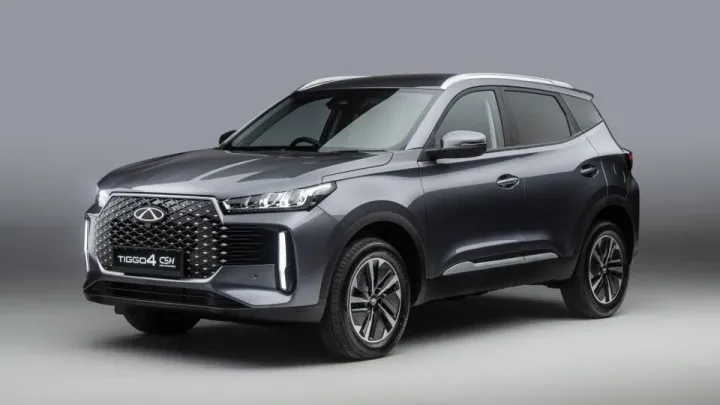
The Changing Face of the British High Street
There is a peculiar thing happening in the UK automotive landscape. If you had walked onto a forecourt a decade ago and asked for a brand-new, family-sized SUV with 200 horsepower and a seven-year warranty for under twenty grand, the salesman would have laughed you out of the showroom. Today, that proposition isn't just a fantasy; it is the specific battleground where Chery, one of China’s automotive giants, intends to plant its flag. The Chery Tiggo 4 CSH represents the entry point for a brand that is technically new to our shores but carries the weight of a multi-million-car-per-year global operation behind it.
We are living through a period of 'the squeeze.' Established European brands are moving upmarket, leaving a vacuum at the bottom of the price list. Dacia has owned this space for years, and MG has successfully pivoted into it. Now, Chery is arriving with the Tiggo 4, and on paper, it looks like a bit of a disruptor. But as we know all too well in the UK, a car that works in Wuhu doesn't always work in Watford. British roads are uniquely demanding, and British buyers are notoriously brand-conscious.
Quick Take
The Chery Tiggo 4 CSH is a compact SUV that aims to offer more for less. It is a 'full' hybrid (no plugging in required) that produces a combined 204PS, which is a significant figure for this segment. It sits below the Tiggo 7 and Tiggo 8 in the range, competing directly with the likes of the MG ZS, the Dacia Duster, and the Suzuki Vitara. With a starting price of £19,995, it is positioning itself as the rational choice for families who want the security of a long warranty and the efficiency of a hybrid without the premium price tag typically associated with Toyota or Honda.
Key Figures: The Tale of the Tape
Before we dive into the aesthetics, we have to talk about the numbers. The headline is that £19,995 starting price. In an era where a well-specced supermini can easily top £25,000, seeing a '2' at the start of an SUV's price tag is a rarity. Under the bonnet is a 1.5-litre petrol engine mated to Chery's Super Hybrid (CSH) system. The total output is 204PS, which is arguably overkill for a car of this size, but it provides a useful buffer for motorway overtakes and full-load family trips. It’s a front-wheel-drive setup, focused on urban efficiency rather than green-laning prowess.
Design: Not Just Another Generic Box
Design is subjective, but Chery has been clever here. They haven't gone for the 'weird' or the 'futuristic' look that can sometimes alienate conservative UK buyers. Instead, the Tiggo 4 looks like a 'mini-me' of its larger siblings. There is a large, diamond-patterned grille that gives it a bit of presence, flanked by sharp LED daytime running lights. It has the classic SUV silhouette - raised ride height, roof rails, and black plastic cladding around the wheel arches to signal its 'rugged' intentions.
It is a compact car, measuring roughly 4.3 metres in length. This is the 'Goldilocks' size for the UK: small enough to parallel park in a tight supermarket space, but large enough to not feel intimidated by a HGV on the M1. The 17-inch or 18-inch alloy wheels (depending on trim) fill the arches reasonably well, though I suspect the ride quality might be better served by the smaller rims and more sidewall - something we will want to verify on a proper B-road test.
The Cabin: Where the Value Shows (or Doesn't)
Stepping inside, you are met with a layout that is surprisingly modern. Chery has avoided the 'bargain basement' feel that plagued early Chinese imports. You get a 'double-screen' setup that is very much the fashion right now, combining a digital driver display with a central infotainment touchscreen. There are soft-touch materials on the dashboard, which is a nice touch, though as your hands wander lower down the cabin, you will encounter the harder, scratchier plastics that remind you where the savings were made.
The seats feel supportive enough for a short journey, but I’d want to spend a three-hour stint in them before declaring them 'long-distance comfortable.' One thing to note is the physical buttons - or lack thereof. Chery has integrated many functions into the screen or touch-sensitive panels. While this looks clean, I’d always prefer a physical dial for the volume or climate control. It’s one of those things you’ll need to test for yourself to see if the interface is lag-free or frustratingly fiddly.
Infotainment and Connectivity
The Tiggo 4 comes well-equipped with Apple CarPlay and Android Auto as standard - a non-negotiable for most buyers today. The interface is colourful and reasonably high-resolution. However, software tuning is often where newer brands struggle. I’d be looking closely at the translation of the menus (nothing ruins the 'premium' feel faster than a typo in the settings) and how quickly the system boots up when you start the car. There is also a wireless charging pad and multiple USB ports, which should keep the teenagers in the back happy.
Practicality: The Family Yardstick
For a compact SUV, the Tiggo 4 does a decent job of packaging. There is enough headroom for six-footers in the front and back, though three adults across the rear bench will be a squeeze. Legroom is competitive for the class - better than a Nissan Juke, perhaps a little tighter than a Skoda Kamiq. The boot space is the real question mark. Chery hasn't been overly vocal about the exact litreage for the UK spec yet, but in this class, you generally expect around 350 to 400 litres. The hybrid batteries often eat into the under-floor storage, so don't expect a full-sized spare wheel; a repair kit is the likely reality here.
Powertrain and Efficiency: The CSH System
This is the Tiggo 4's secret weapon. Most budget SUVs at this price point give you a small, turbocharged three-cylinder petrol engine. Chery gives you a Super Hybrid. This is a full hybrid system, similar in concept to Toyota's, meaning it can run on electric power alone for short distances at low speeds, recharging its battery through regenerative braking and the engine itself.
With 204PS on tap, it should be significantly quicker than a Dacia Duster Hybrid. The key will be the transmission. Chery uses a Dedicated Hybrid Transmission (DHT) which is designed to manage the two power sources seamlessly. In theory, this should provide smooth, linear acceleration. In practice, I would want to test how the engine sounds when you ask for full power. Some hybrids can become quite vocal and 'droning' under heavy load - something that can be a deal-breaker for those used to the quiet refinement of a traditional turbo-petrol engine.
Ride and Handling: The British Pothole Challenge
We haven't yet put the Tiggo 4 through a definitive UK 'torture test,' but we can make some educated guesses. The car uses a fairly standard suspension setup for this class. The challenge for Chery is to tune that suspension for our unique road surfaces. China tends to prefer a softer, 'waftier' setup, but that often leads to a car feeling floaty and disconnected on a winding British B-road. I’ll be looking for how it handles mid-corner bumps - does the rear end skip, or does it stay planted? The steering is likely to be light and easy for city driving, which is great for parking, but it might lack the communication you’d want on a wet Tuesday night in the Peak District.
Driver Assistance: Keeping You on the Straight and Narrow
Chery is packing the Tiggo 4 with ADAS (Advanced Driver Assistance Systems). Expect lane-keep assist, emergency braking, and adaptive cruise control. While this is great for safety ratings and peace of mind, the 'calibration' is everything. If the lane-keep assist is too aggressive (yanking the wheel at every opportunity) or if the speed limit warnings are overly sensitive and 'beepy,' it can become a nuisance rather than a help. Buyers should check if these systems can be easily toggled off or adjusted within the menus.
The Ownership Proposition: The 7-Year Reassurance
This is where Chery will win over the sceptics. A seven-year or 100,000-mile warranty is a massive clear sign of intent. It matches Kia and beats almost everyone else. Furthermore, there is an eight-year battery warranty. For a brand that is just starting to build its UK dealer network (partnering with established groups to ensure coverage), this warranty is the safety net that makes a £20,000 punt feel like a calculated investment. Resale values are currently the big unknown, but a transferable long-term warranty usually helps prop up used prices.
Rivals: The Budget Battle Royale
- Dacia Duster: The reigning king of value. The Duster is more 'honest' and potentially more rugged, but the Tiggo 4 offers more tech and significantly more power for similar money.
- MG ZS Hybrid+: The most direct rival. MG has the brand recognition and a massive dealer network. The Tiggo 4 looks slightly more modern inside, but it will be a close-run thing on the monthly finance deals.
- Suzuki Vitara: A bit long in the tooth now, but incredibly reliable and lightweight. The Suzuki will likely feel more agile but lacks the Tiggo's interior polish.
What Works and What Doesn't
What Works
- Pricing: Sub-£20k for a 200hp hybrid is undeniably strong.
- Warranty: Seven years of cover removes a lot of the 'new brand' anxiety.
- Standard Kit: You aren't charged extra for the things you actually want (CarPlay, LEDs, etc.).
What Doesn't
- Brand Awareness: You will spend a lot of time explaining what a 'Chery' is to your neighbours.
- Infotainment Complexity: The reliance on screens over buttons won't suit everyone.
- Unknown Residuals: We don't yet know how much it will be worth in three years' time.
Who Should Consider It?
If you are a value-driven buyer who wants a new car with a full warranty rather than a three-year-old used car from a premium brand, the Tiggo 4 is for you. It’s ideal for urban-based families who do a lot of stop-start driving where the hybrid system can really shine. If you aren't bothered about the badge on the steering wheel but you are bothered about the monthly payment and the fuel bill, it needs to be on your shortlist.
Who Should Look Elsewhere?
Keen drivers who enjoy the 'feel' of a car might find the Tiggo 4 a bit clinical or disconnected. Similarly, if you live in a very rural area where your local dealer is 50 miles away, the convenience of a Ford or Vauxhall might outweigh the value of the Chery. And if you need a massive boot for a pair of Labradors, you might find this compact SUV a bit too... compact.
Final Verdict
The Chery Tiggo 4 CSH isn't trying to reinvent the wheel; it’s just trying to offer the wheel for a lot less money than the competition. It is a spec-sheet hero that brings high-end power and modern tech to a segment that has been neglected by the 'legacy' manufacturers. If Chery has done the homework on UK suspension tuning and the hybrid system proves as efficient as claimed, the Tiggo 4 could be one of the most important budget cars of the year. It’s a bold entry into a crowded market, but with that warranty and that price tag, it has every right to be confident.
FAQs
Is Chery a reliable brand?
Chery is one of China's largest exporters and has been building cars for decades. While new to the UK, their 7-year warranty suggests they are confident in the Tiggo 4's durability.
Does the Tiggo 4 CSH need to be plugged in?
No, it is a self-charging hybrid. It uses the petrol engine and regenerative braking to charge a small battery, which then assists the engine or powers the car for short distances.
Where can I get a Chery serviced?
Chery is currently establishing a UK network, often using existing multi-brand dealership groups. You should check the official Chery UK website for your nearest service point before buying.
How does the 204PS output compare to rivals?
It is significantly higher than most. For context, the Dacia Duster Hybrid has 140hp, and the MG ZS Hybrid+ has around 190hp. The Tiggo 4 should feel quite punchy in daily driving.

