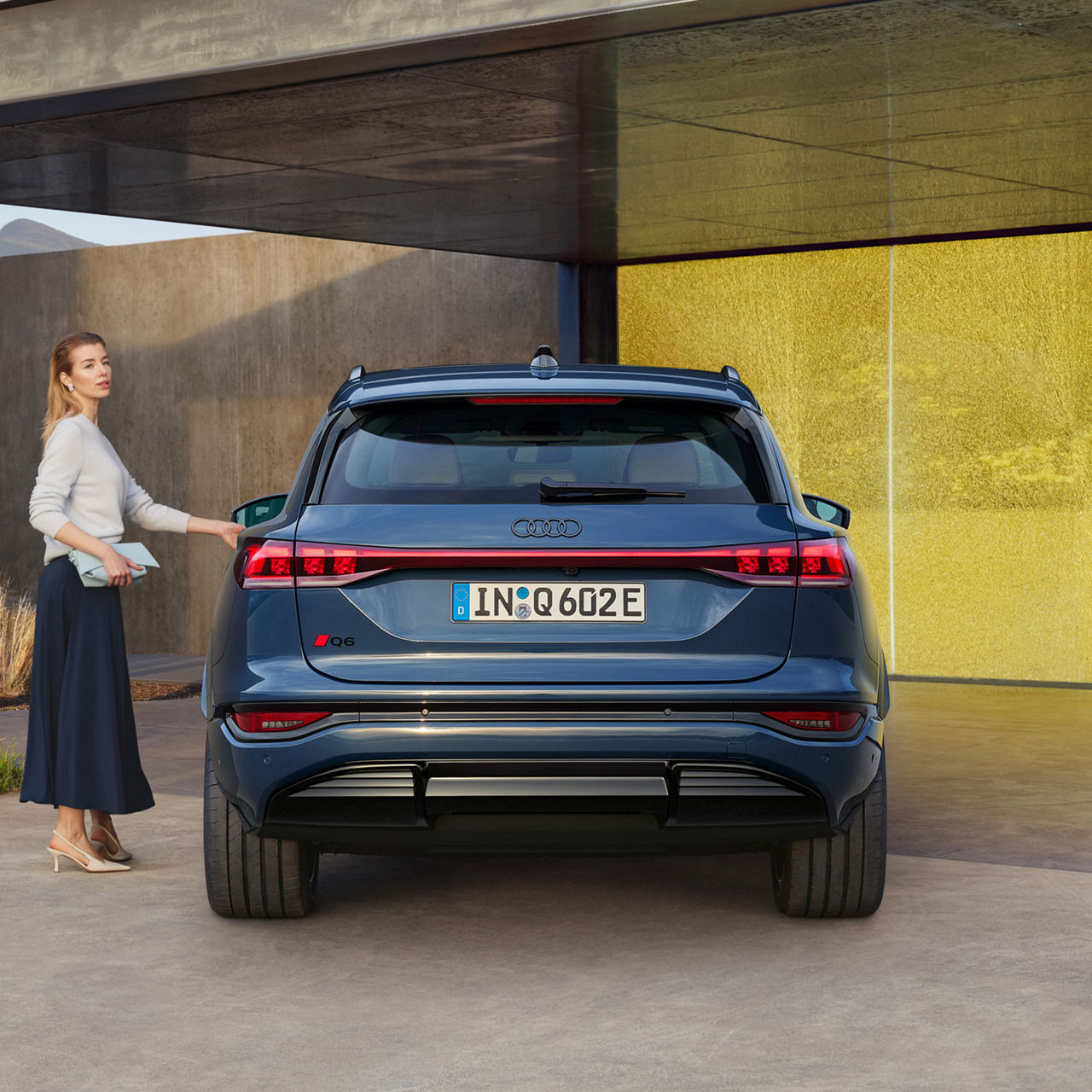
The Audi Q6 e-tron feels like the point where Audi's electric SUV range became genuinely competitive on battery technology as well as cabin quality. With a 94.9kWh usable battery, up to around 381 miles of official range at launch and 270kW rapid charging, it has the long-distance capability a premium family EV needs, although the £68,975 launch price for the quattro meant it was never going to be an impulse purchase.
The Q6 e-tron matters because it is built on the PPE platform developed alongside Porsche, and that brings the sort of 800-volt architecture and charging performance that changes how an EV behaves on a long journey. Earlier Audi electric SUVs were easy to like for their quality and refinement, but not always class-leading on efficiency or charging speed. The Q6 addresses those fundamentals much more convincingly.
Design and positioning
Visually, the Q6 sits neatly between the Q4 e-tron and the larger Q8 e-tron. It is recognisably an Audi rather than an attempt to look futuristic for the sake of it, with a fairly conventional SUV shape, slim lighting and enough surface detail to make the car feel expensive without becoming overly fussy.
That approach suits the brief. A premium family SUV does not need to look like a concept car; it needs to feel substantial, well resolved and easy to live with. The Q6 does that while still giving the newer electric range a clearer identity than some of Audi's earlier EVs.
Inside the cabin
The curved digital stage combines the driver display and central infotainment into one broad visual unit, with an optional separate passenger display on higher specifications. The cabin feels much more contemporary than the older Q8 e-tron, but still retains the sense of material quality and precision people expect from an Audi at this price.
I would judge it less by the number of screens and more by how quickly the common functions become second nature. Climate control, navigation, charging settings and driver assistance are the things you interact with every day, and a premium interior only earns its keep if those basics are as well thought out as the materials.
Space and practicality
The Q6 offers a 526-litre rear boot plus a useful 64-litre front storage compartment, which is exactly where charging cables belong in an EV. Fold the rear seats and Audi quotes up to 1,529 litres, giving it enough flexibility for the sort of family use a car this size should handle without drama.
At 4,771mm long, it is a substantial vehicle, and the width is worth checking against older garages and tighter parking spaces. The advantage is a cabin designed around five adults rather than one adapted from a combustion platform. It feels like a proper family SUV rather than an electric derivative squeezed into somebody else's packaging.
Battery, range and charging
The launch Q6 e-tron quattro uses a 100kWh gross battery with 94.9kWh usable capacity. Audi quoted up to around 381 miles WLTP depending on specification, although the exact figure changes with wheels, trim and drivetrain. That is enough range to make the Q6 a realistic primary car for people who regularly cover long distances.
The more important number for me is 270kW. Audi quotes roughly 21 minutes for a 10-to-80 per cent rapid charge under suitable conditions, which is the sort of performance that makes motorway EV ownership noticeably easier. Battery temperature, charger capability and starting state of charge still matter, but the underlying architecture gives the car a far better chance of delivering genuinely short stops.
Performance and road manners
The launch quattro produces 388PS and reaches 62mph in 5.9 seconds, which is more than enough for a family SUV. I would not be tempted by the SQ6 unless the extra performance is something you genuinely value, because the standard car already has the effortless overtaking and low-speed response expected from a premium EV.
I have not driven this particular Q6 e-tron, so I would not turn launch-test impressions into my own road verdict. The consistent themes from independent testing were strong cabin quality, space and brake feel, with ride comfort varying depending on wheel and suspension setup. That makes wheel size and road surface far more important on a test drive than the acceleration figure.
Which version makes sense?
The original UK launch focused heavily on the quattro, but rear-wheel-drive versions arrived later and can make a lot of sense because they reduce cost while retaining the PPE platform's charging advantages. Unless you specifically need all-wheel drive, stronger towing ability or the added performance, I would compare the single-motor cars very carefully.
For towing, quattro versions can be rated at up to 2,400kg braked, which is unusually useful for an EV. Anyone buying for that purpose should still check the exact derivative, payload and trailer combination, but it gives the Q6 a capability many electric SUVs simply do not offer.
Leasing and alternatives
The Porsche Macan Electric is the obvious technical relation with a more sporting character, while the Audi A6 e-tron uses related technology in a lower, more aerodynamic body. The Polestar 4 is another strong premium alternative if you want something visually less traditional.
Verdict
The Q6 e-tron is convincing because the biggest improvements are not just cosmetic. The large usable battery, 800-volt architecture and 270kW charging genuinely change what the car is like to own, especially for drivers who use an EV for long motorway journeys.
The launch quattro was expensive, so I would be disciplined with trim and drivetrain rather than assume the most powerful version is the best one. Get the specification right and the Q6 feels like Audi finally has an electric SUV whose underlying technology is every bit as persuasive as the badge on the bonnet.