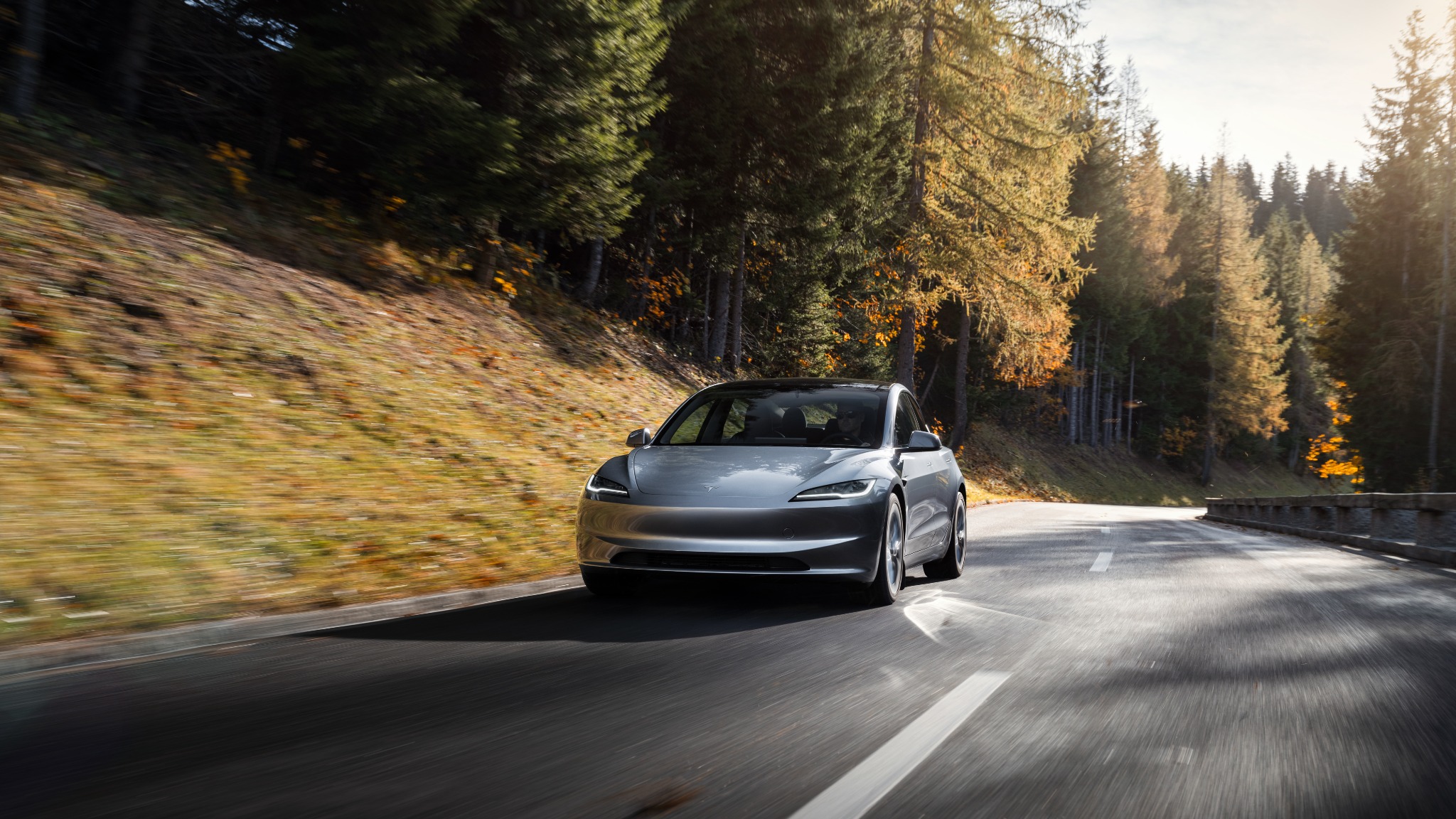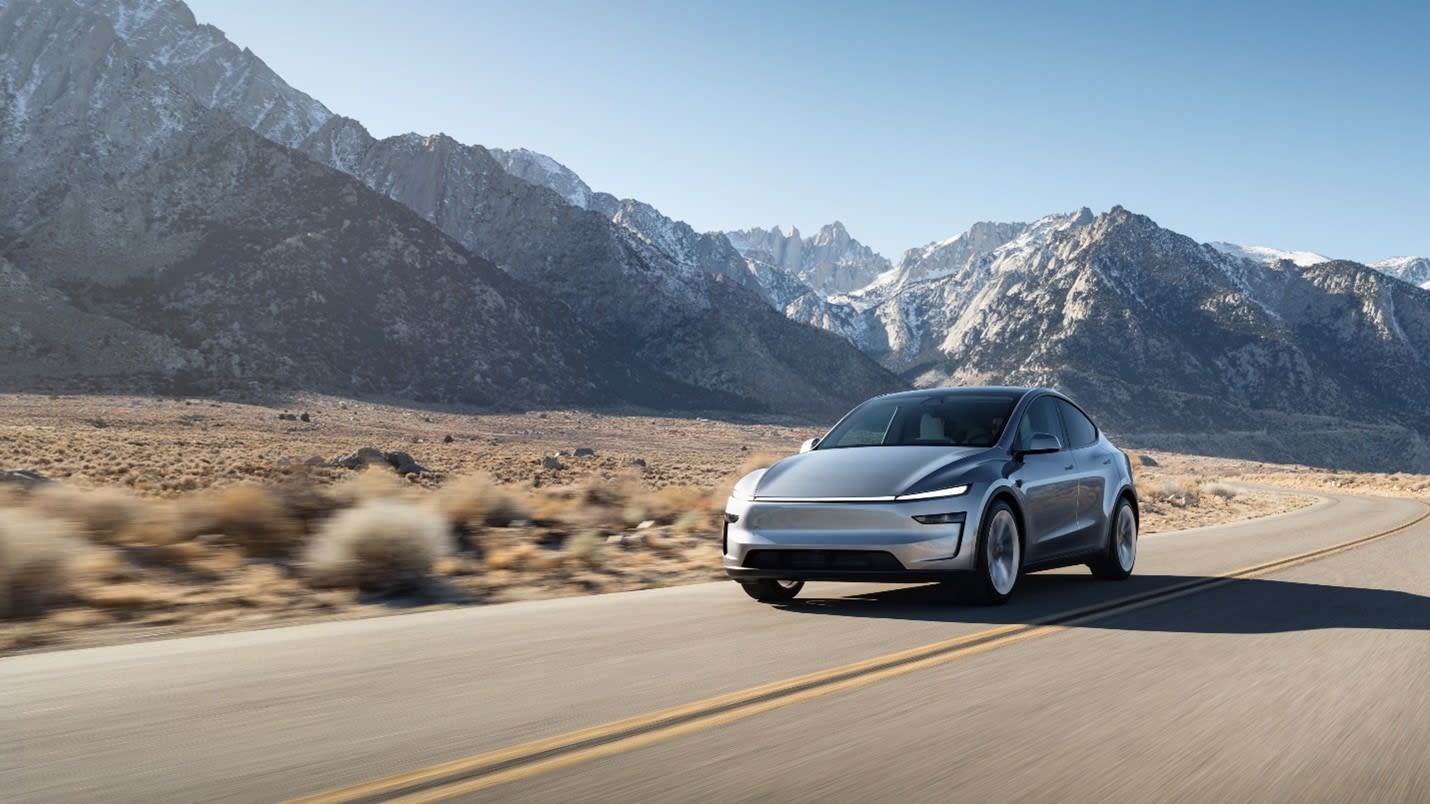
The 2025 Tesla Model Y update fixes many of the weaknesses that made the original easy to recommend on paper but harder to love in day-to-day use. The refreshed car is quieter, more comfortable and better finished while keeping the space, charging network and long-range ability that made the Model Y such a strong family EV in the first place.
The old Model Y was a brilliant electric powertrain wrapped in a car that could feel unnecessarily firm and austere. Tesla clearly knew that, because this update puts far more emphasis on refinement than on chasing another dramatic performance figure. Acoustic glass, suspension changes, improved seats and a calmer cabin all target the areas where the previous car felt least polished.
Design and first impressions
The exterior has been smoothed out rather than completely reinvented, with a full-width lighting treatment, cleaner detailing and a slightly more sophisticated look. It is still recognisably a Model Y, which is sensible because the original shape was one of the reasons the car packaged people and luggage so effectively.
The update also feels less stark visually. There is more attention to detail around the lighting and body surfaces, and the result looks less like a scaled-up Model 3 than before. It is not dramatic, but it feels more resolved.
Inside the cabin
The basic Tesla philosophy remains the same, with the central screen handling almost everything, but the materials, seats and overall refinement have moved on. Ventilated front seats, better acoustic insulation and a rear passenger screen make the cabin feel more complete, particularly for families.
Tesla also retained an indicator stalk, unlike the updated Model 3, although the traditional column gear selector disappeared and drive direction is selected through the screen. That is the kind of interface decision I would want to try repeatedly in parking manoeuvres before deciding whether it becomes second nature or simply adds friction to an everyday task.
Space and practicality
The Model Y remains one of the easiest electric SUVs to recommend for family space. There is a large rear load area, substantial underfloor storage and a useful front trunk, while the flat rear floor and broad hatch make the cabin and boot easy to use.
Tesla's own measurements quote 822 litres behind the second row plus 116 litres in the front trunk, although its measuring method is more generous than the VDA figures used by many European rivals. I would ignore the litres competition and simply load the actual luggage you carry, because the shape and access are the things that matter in real life.
Range and charging
The UK Launch Edition Long Range All-Wheel Drive was rated at 353 miles WLTP. Tesla later introduced cheaper and different derivatives, so that figure should be treated as the launch specification rather than a current range-wide maximum.
The car supports up to 250kW DC Supercharging, and Tesla's biggest ownership advantage remains the way route planning, charger availability and battery preparation are integrated. Other charging networks have improved enormously, but the ability to enter a destination and let the car organise the journey is still one of the brand's strongest everyday features.
Refinement and what changed on the road
Tesla says road noise fell by 22 per cent, impact noise by 20 per cent and wind noise by 20 per cent compared with the previous Model Y. The suspension was also revised specifically to improve comfort, which is exactly where I would have wanted the development budget to go.
The revised suspension and additional sound insulation target two of the most common criticisms of the earlier Model Y. I'd concentrate on how the updated car deals with patched urban surfaces, speed humps and a rough dual carriageway, because a smooth ten-minute showroom route rarely tells you much about long-term comfort.
Was the Launch Edition worth it?
The Launch Edition was deliberately expensive at £59,990 because it bundled the first UK cars with high specification, all-wheel drive and cosmetic extras. It made sense for somebody determined to be among the earliest owners, but it was never the version I would use to judge the whole facelifted range.
For most buyers, I would choose the derivative that gives the range and equipment you actually need without paying for launch-edition exclusivity. That is where live lease pricing matters more than the historical list price.
Leasing and alternatives
The Ford Explorer EV gives a more conventional cabin and similarly useful long-range family brief, while the Renault Scenic E-Tech puts more emphasis on family-focused interior details. The Kia EV6 remains relevant if faster high-voltage charging and a more traditional driving environment appeal.
Verdict
The updated Model Y looks like a much better-rounded version of a car that was already exceptionally strong in several important areas. Tesla did not need to make it dramatically faster; it needed to make it quieter, more comfortable and more premium-feeling, and those are exactly the changes the redesign targets.
I would skip the expensive Launch Edition unless the specification itself matters to you and compare the current Rivervale lease deals across the range. If the ride improvements are as convincing on your roads as the early tests suggest, the Model Y becomes considerably harder to argue against.