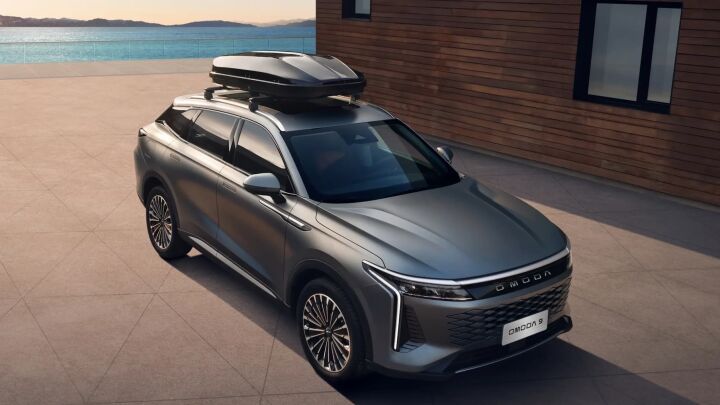
The Changing Face of the British Driveway
If you had suggested a decade ago that one of the most statistically impressive SUVs on the UK market would come from a brand most people couldn't pronounce, you would have been met with a healthy dose of British scepticism. Yet, here we are. Omoda, a sub-brand of the Chinese giant Chery, is not merely dipping a toe into our waters; it is diving in headfirst with a flagship that aims to make the traditional German and Swedish heavyweights look, frankly, a bit stingy. The Omoda 9 is the brand's 'clear sign of intent' car. It is a large, imposing, and technologically dense SUV designed to sit at the top of their hierarchy, offering the kind of performance and electric-only range that was, until very recently, the exclusive preserve of six-figure luxury cruisers.
The Quick Take
The Omoda 9 is a large, premium-leaning SUV that sits in the same physical space as a Volvo XC60 or a BMW X3, but arguably offers the interior volume and presence of the class above. Its headline act is a sophisticated Plug-in Hybrid (PHEV) powertrain that promises nearly 100 miles of pure electric driving. For the UK buyer, particularly those navigating the complexities of Benefit-in-Kind (BIK) tax, this is more than just a convenience - it is a financial masterstroke. On paper, it is faster, more powerful, and longer-legged than almost anything else at its projected price point. The question I want to answer is whether that paper-based excellence translates into a car that feels 'right' on a drizzly Tuesday on the M4.
Key Figures: The Tale of the Tape
Before we dive into the aesthetics, we must address the numbers, because they are staggering. The Omoda 9 SHS (the PHEV variant) utilises a 1.5-litre turbocharged petrol engine paired with a sophisticated dual-motor electric system. Total system output is quoted at 449PS (443bhp) and a massive 700Nm of torque. To put that in perspective, that is more torque than a Porsche 911 GT3. It will sprint from 0-62mph in just 4.9 seconds, which is arguably more performance than any family SUV strictly needs, but it provides a sense of effortless muscularity. Most importantly, the 93-mile electric range (WLTP) places it in the lowest possible BIK bracket for a non-EV, a feat very few rivals can currently match.
Design: Sophistication over Shoutiness
Visually, the Omoda 9 follows the 'Art in Motion' design philosophy we first saw on the smaller Omoda 5, but here it has been matured and refined. The front end is dominated by a borderless 'diamond' grille that blends into the bodywork, flanked by very slim, sharp LED daytime running lights. It has a 'floating roof' effect thanks to blacked-out pillars and a gently sloping rear silhouette that mimics the 'SUV-Coupe' trend without sacrificing too much headroom. It is a handsome car - substantial without being overly aggressive. The door handles sit flush with the bodywork, popping out when you approach, a touch that feels suitably high-tech for a flagship. It doesn't scream for attention, but in a supermarket car park, it has a definite 'what is that?' allure that suggests a higher price tag than we expect Omoda to ask.
The Cabin: A Premium Leap Forward
Stepping inside the Omoda 9 is where the most significant surprises lie. The brand has clearly reference pointed the Mercedes-Benz GLC and Volvo XC60, and in many areas, they have hit the mark. The dashboard is dominated by a massive, curved dual-screen setup - one for the driver's instruments and one for the central infotainment. The materials appear high-grade; there is a generous use of soft-touch plastics, stitched leather-effect surfaces, and 'wood' or 'metal' accents that feel cool to the touch rather than flimsy. Comfort features are a priority here. Depending on the final UK specification, we expect to see heated, ventilated, and even massaging front seats. The steering wheel is chunky and leather-wrapped, and the centre console sits high, cocooning the driver in a way that feels sporty yet secure. My initial impression is that this is a cabin designed for long-distance refinement.
Infotainment and Connectivity
At the heart of the experience is a Qualcomm Snapdragon 8155 chip, which is tech-speak for 'it’s very fast.' The menus respond with the fluidity of a high-end smartphone, and the graphics are crisp. You get the usual suite of Apple CarPlay and Android Auto, but Omoda’s native system is actually quite intuitive. There is a dedicated 'Hello Omoda' voice assistant which handles climate and navigation tasks, though I would want to test its ability to understand regional British accents over a week-long trial. One notable feature is the 50W wireless charging pad which includes a cooling vent - a small but thoughtful touch to prevent your phone from overheating during a long navigation session.
Practicality: The 660-Litre Question
For a family SUV, practicality is non-negotiable. The Omoda 9 offers a 660-litre boot, which is genuinely impressive for a PHEV. Usually, the batteries for a hybrid system eat into the luggage space, but Omoda seems to have packaged the components efficiently. This makes it larger in terms of raw volume than many of its European competitors. Rear legroom is also generous; even with a tall driver in the front, adults in the back will have plenty of space to stretch out. The floor is relatively flat, meaning three children across the back shouldn't result in too many arguments over footwell space. There are ISOFIX points where you’d expect them, and the wide-opening doors make loading child seats less of a chore than in some more 'styled' rivals.
Powertrain and Efficiency
The 1.5T engine works in tandem with a 3-speed DHT (Dedicated Hybrid Transmission). This isn't a simple 'engine plus motor' setup; it's a complex system designed to keep the car in its most efficient power band. The 93-mile electric range is the star of the show. For the average UK commuter, this means you could realistically go weeks without ever burning a drop of petrol, provided you have a home charger. Even when the battery is depleted, the system operates as a traditional hybrid, reclaiming energy through regenerative braking. I would be keen to see how the 'real world' range holds up in a British winter, but even if it delivers 70% of its claim, it would still outperform almost every other PHEV on sale today.
On the Road: Performance and Ride
With 449PS on tap, 'performance' is perhaps an understatement. In a straight line, the Omoda 9 is genuinely quick. The 0-62mph time of 4.9 seconds is enough to catch many sports car drivers off guard. However, this isn't a car designed for B-road thrashed. It features CDC (Continuous Damping Control) suspension, which adjusts the firmness of the ride in real-time. The goal here is 'waftability.' It is designed to iron out the creases in the tarmac and provide a silent, serene cruising experience. In electric mode, it is whisper-quiet. When the petrol engine does kick in, the transition is largely seamless, though I would want to check for any 'drone' under heavy acceleration during an uphill motorway merge. The steering is light and geared towards ease of use in the city, making a car of this size feel surprisingly manageable in tight spots.
Handling and Driver Assistance
In terms of handling, the Omoda 9 feels like a heavy car, which it is. The AWD system provides excellent traction, especially in the damp conditions we so often face in the UK. It feels stable and planted, though there is a natural amount of body roll if you really push it into a corner. As for safety, it comes loaded with an ADAS (Advanced Driver Assistance Systems) suite that includes everything from lane-keep assist to adaptive cruise control and blind-spot monitoring. Previous Omoda models have been quite 'vocal' with their safety warnings; I would hope the Omoda 9 has been calibrated to be a little more subtle for the European market, though these systems can usually be adjusted via the touchscreen.
What Works and What Doesn't
What works: The electric range is a game-changer for tax efficiency. The interior quality is a massive step up for the brand and feels genuinely premium. The boot space is very competitive for a PHEV, and the standard equipment list is likely to be exhaustive, including things like a 360-degree camera and a high-end Sony audio system. What doesn't (or needs checking): The brand recognition is still low in the UK, which affects resale values. The sheer weight of the car is felt in the corners, and the software - while fast - needs to be free of the 'nanny state' bleeps that can frustrate UK drivers. We also need to see the final UK pricing; if it's too close to a Volvo or BMW, the 'value' argument becomes harder to make.
The Rivals
- Volvo XC60 Recharge: The reference point for interior zen and safety, but the Omoda 9 will likely undercut it significantly on price and offer more electric range.
- BMW X3 xDrive30e: Offers a more engaging drive and 'badge' prestige, but the Omoda 9's 4.9s 0-62mph and tech suite might tempt those less bothered by the roundel.
- Mercedes-Benz GLC 300e: The GLC also offers a long EV range (around 80 miles), making it the Omoda's closest rival for BIK tax efficiency.
Who is the Omoda 9 for?
It is ideally suited for the company car driver who wants to slash their monthly tax bill without sacrificing luxury or performance. It’s also a strong contender for the modern family who needs a large, safe, and tech-heavy SUV but doesn't want to pay the 'premium tax' associated with German marques. If you have a driveway and can charge at home, the Omoda 9 could be an incredibly cheap car to run daily.
Who should look elsewhere?
If you are a 'driving enthusiast' who wants a car that feels light on its toes and communicates every ripple of the road through the steering wheel, you might find the Omoda 9 a bit too insulated. Similarly, if brand prestige and the guaranteed high residuals of an established manufacturer are your primary concerns, the Omoda's 'newcomer' status might feel like a risk.
The Verdict
The Omoda 9 is a fascinating vehicle because it represents the moment that 'disruptor' brands stopped trying to compete on price alone and started competing on substance. It isn't just a cheap alternative; in terms of EV range and raw performance, it is actually leading the pack. It looks good, the interior is a genuine triumph of design and material choice, and the 93-mile electric range is a stroke of genius for the UK market. The big test will be the long-term ownership experience and how the car's 'brain' handles the nuances of British roads. If Omoda gets the pricing right - as they likely will - the established premium players should be very, very nervous.
Frequently Asked Questions
- What is the warranty on an Omoda 9? Omoda typically offers a 7-year/100,000-mile warranty in the UK, which should provide peace of mind regarding long-term reliability.
- How long does it take to charge? While final UK specs are being confirmed, the 93-mile range suggests a battery of around 30-35kWh. Expect a 10-80% charge in about 30-40 minutes on a DC fast charger.
- Is there a 7-seat version? While a 7-seat configuration exists in other markets, the UK focus at launch is on the premium 5-seat layout to maximise boot space and comfort.

