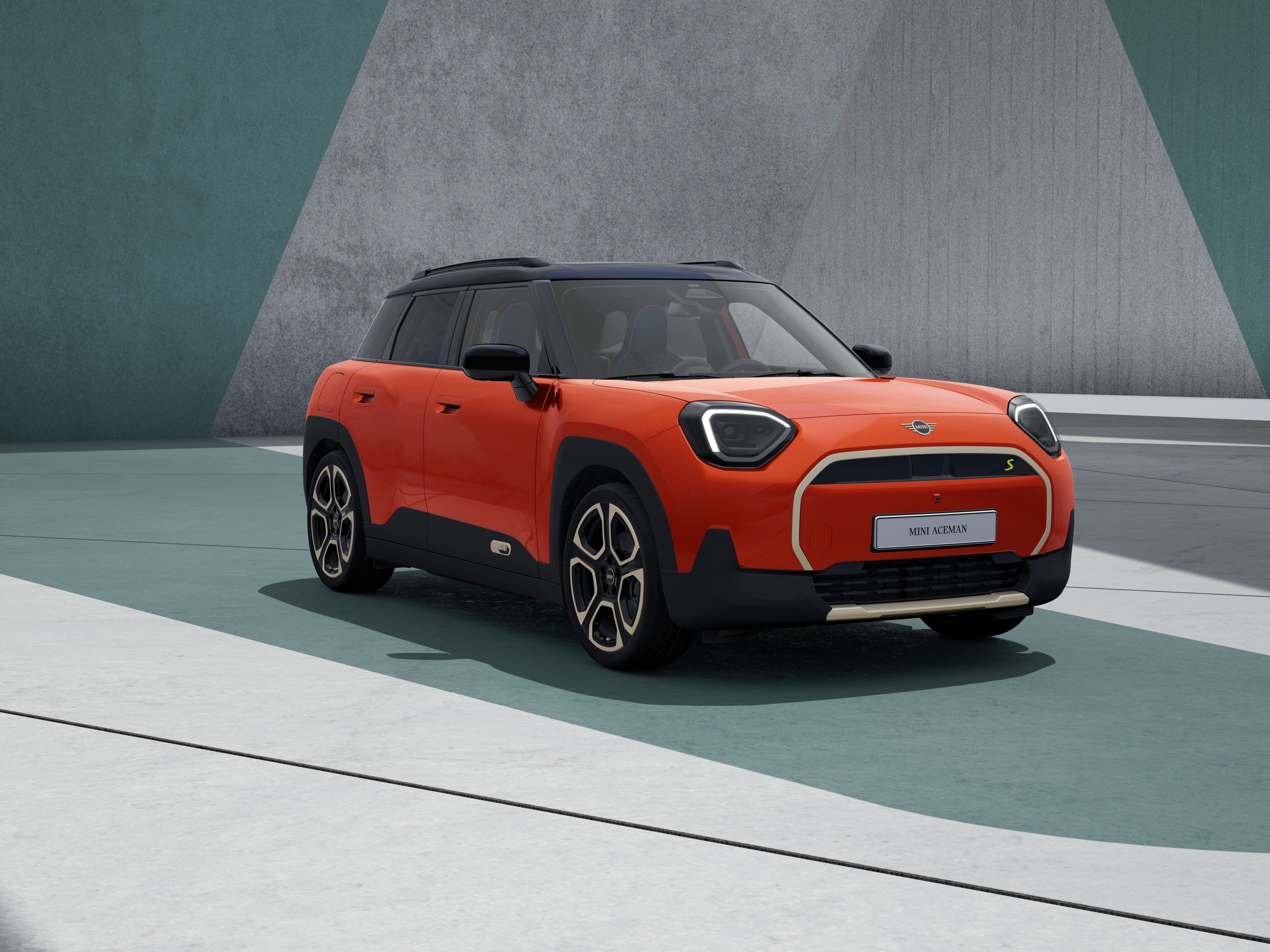
The MINI Aceman is probably the most useful electric MINI for buyers who want the brand's personality without the three-door compromises of the Cooper or the extra size of the Countryman. The 54.2kWh SE is the version that makes the most sense to me because its official 252-mile range gives the car enough flexibility to work beyond the city.
The Aceman fills a very obvious gap in MINI's range. It is just over four metres long, has five doors and five seats, but still feels compact enough to suit the sort of urban driving MINI has always been good at. That sounds simple, but it gives the car a clearer role than many small electric crossovers that grow so large they lose the point of being compact.
Design and character
MINI has leaned heavily into the brand's more playful side with the Aceman, and I think that suits it. The upright stance, short overhangs and geometric details make it recognisable without simply looking like a stretched Cooper. It has more visual presence than a conventional supermini, but it avoids the oversized grille and heavy proportions that can make small SUVs look more cumbersome than they really are.
The Aceman is also one of those cars where colour and wheel choice make a big difference. I would be careful not to over-specify it with the largest wheels simply because they look good in the configurator, because ride comfort and efficiency matter far more on a compact EV used every day.
Inside the cabin
The circular OLED display is the obvious centrepiece, but the more interesting part is how MINI has tried to create atmosphere around it. Textured fabrics, recycled materials and the simplified dashboard give the cabin much more personality than the usual slab of glossy trim and rectangular screen.
Most major functions are concentrated into that central display, which looks impressive but makes usability worth checking properly. I would spend a test drive doing ordinary things such as changing the temperature, entering a destination and adjusting assistance settings, because an interface that looks clever in a showroom can become irritating if basic functions are buried too deeply.
Space and practicality
The Aceman has five doors and five seats, but the 300-litre boot is a reminder that this is still a compact car. With the rear seats folded, capacity rises to 1,005 litres, so there is useful flexibility for larger loads, but families carrying a buggy, dog crate or several holiday bags should check the actual space rather than assume SUV styling automatically means SUV practicality.
I actually like that MINI has kept the footprint sensible. The Countryman already exists for buyers who need more room, and there is no point making the Aceman larger just to win a boot-capacity comparison. The key is making sure the space you do get is enough for your routine.
E or SE?
The entry Aceman E uses a 42.5kWh battery, produces 184hp and offers up to 192 miles of WLTP range. The SE moves to a 54.2kWh battery, 218hp and up to 252 miles, while cutting the 0-62mph time to 7.1 seconds. The extra performance is welcome, but the range difference is the real reason I would choose the SE.
A 192-mile official range can still work perfectly well for local use, particularly with home charging, but it leaves less margin in winter or at motorway speed. The SE gives the Aceman enough breathing space to be used for a weekend away without making every journey revolve around the next charger.
Charging and everyday use
The SE supports up to 95kW DC charging and the E up to 75kW, with MINI quoting a 10-to-80 per cent refill in under 30 minutes. Those peak figures are modest compared with some newer rivals, but the battery capacities are also smaller, so total charging time remains sensible.
For most owners, 11kW AC capability and a reliable home-charging routine will matter more than the headline rapid-charging number. If the Aceman starts each morning full, the SE's range should cover a large proportion of normal driving without any public charging at all.
What matters on the road
A MINI needs to be engaging without becoming tiring on a rough British road. The Aceman's steering, low-speed ride and response to bigger bumps would all be priorities for me, particularly on versions with larger wheels. That's where the balance between character and everyday comfort becomes important.
The character is part of the appeal, so I would not expect the Aceman to ride like a soft family SUV. It does, however, need to be comfortable enough to live with every day, and that balance is worth checking carefully before choosing larger wheels or a sportier specification.
Pricing, leasing and rivals
The Aceman's value depends heavily on which battery and trim you choose. My preference would be to spend on the larger SE battery before adding expensive cosmetic upgrades, because range affects how useful the car is every day while many visual options simply make it more expensive.
Verdict
The Aceman works because it does not try to do everything. It is compact, distinctive and practical enough for many households, while still feeling much more like a MINI than a generic electric crossover.
I would choose the SE because the extra range changes the car from a mostly urban proposition into something much easier to use as an only car. If the ride comfort and screen-heavy interface suit you, the Aceman is arguably the most broadly useful electric MINI in the range.


