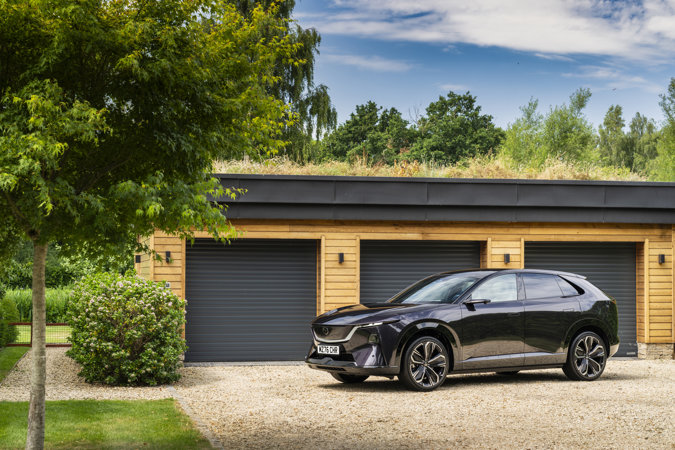
Is the 2026 Mazda CX-5 still a sensible family SUV?
The new Mazda CX-5 makes a strong practical case for buyers who want a petrol family SUV without plugging in. Its larger cabin and useful boot deserve attention, but the 141PS mild-hybrid engine and new touchscreen layout need to suit your priorities. This is a specification-based assessment, pending a road test.
The CX-5 has never needed to shout particularly loudly. That is part of the appeal. A family car has enough to do without spending every journey reminding you how futuristic it thinks it is.
This third-generation car changes more than the familiar name suggests. It is larger, the cabin has moved further towards touchscreen operation, and the UK engine is a 2.5-litre petrol mild hybrid. If you are replacing an older CX-5, treat this as a fresh decision rather than ticking the same box again.
What has changed for 2026?
Mazda's UK launch information puts the entry price at £31,550 and confirms a six-speed automatic gearbox across the range. There are front-wheel-drive versions, with all-wheel drive available higher up the line-up.
The useful changes are the ones a family will notice. A longer wheelbase, wider-opening rear doors and a more flexible rear bench are more relevant to everyday life than another dramatic name for a light signature. I would check those improvements with your own child seats and passengers before spending extra on the top trim.
Is the 2.5-litre engine a full hybrid?
No. Mazda describes it as a 24V mild-hybrid system. It supports the petrol engine; it is not a plug-in hybrid and should not be bought on the assumption that it can cover a daily commute on electricity.
The UK specification is 141PS and 238Nm, with an official 0–62mph time of 10.5 seconds for the front-wheel-drive car. The engine capacity alone does not tell you how quick it is. Equally, the headline power figure does not tell you how comfortably it will handle your normal journeys.
For me, a useful test would involve passengers, a hill and the sort of overtaking you actually do. This assessment cannot settle the question of refinement under load. I would put that ahead of the showroom demonstration of the biggest screen.
How practical is the new CX-5?
Mazda's UK brochure lists a 583-litre boot and a 40:20:40 split rear seat. That split is particularly useful if you want to carry something long while keeping two rear seating positions available.
Boot capacity is a starting point. Look at the opening, floor height and where charging leads would go in a rival plug-in model. Think about how often you carry adults in the back, too. A car can look enormous from the pavement and still be awkward with the front seat adjusted for its usual driver.
The CX-5's practical brief looks convincing on paper. I would still want to load it properly before calling it the answer for every family.
Does the new screen improve the cabin?
The move to Google built-in and a larger central display is a substantial change. Mazda's separate technology announcement describes a 12.9-inch screen, increasing to 15.6 inches on the relevant higher-grade specification, alongside a digital instrument display.
A bigger screen can make maps easier to read. It does not automatically make routine controls easier to use. On a test drive, change the temperature, choose a radio station and find the driver-assistance settings. If those jobs are fiddly, you will notice them much more often than the screen's diagonal measurement.
I would also ask which connected services are included, how long the included period lasts and what happens afterwards. The car needs to work for your intended ownership period, not just during the demonstration.
Which version would I start with?
Start at the lower end and add only what solves a real need. The UK range is Prime-Line, Centre-Line, Exclusive-Line and Homura. Upper trims bring tempting equipment, but the point of this car is that ordinary family use should already be well covered.
All-wheel drive is worth considering for a specific traction requirement. It is not something every school run needs. Anyone towing should confirm the precise derivative's approved limits, the loaded weight of the trailer and the car's payload rather than relying on a range-wide maximum.
What should you compare it with?
The Dacia Duster is a useful value check. The Geely Starray EM-i provides a contrasting plug-in-hybrid proposition if you can charge regularly. The Volkswagen Tiguan PHEV belongs on that charging-friendly shortlist too.
Those are different solutions to the family-car problem. Compare the actual equipment and ownership arrangement you need, not simply the smallest advertised monthly payment.
What is the verdict?
The new CX-5 deserves a viewing for its practical layout and straightforward petrol brief. I would favour a sensibly equipped version over automatically heading for the flagship.
The unresolved questions are the important ones: whether the engine feels sufficiently relaxed with your usual load and whether the new controls are convenient. Get those right and the Mazda could be an easy car to live with. Get them wrong and a good-looking specification sheet will not rescue the purchase.
Sources and review basis
Written by Ben Freakley, using Mazda's UK pricing announcement, the UK specification brochure and Mazda's cabin technology explanation. Checked 21 October 2026. Price quoted is the published launch entry price; obtain a current quotation. Photograph: Mazda UK press pack. More Mazda coverage.