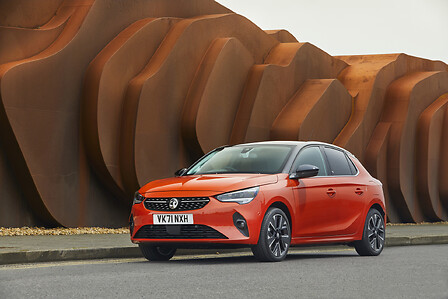
The Vauxhall Frontera Electric is most convincing as an affordable, roomy family EV for local and regional use. At £23,495 at launch it offered a 460-litre boot and five-seat practicality for surprisingly little money, but the original 44kWh version's 186-mile official range means regular long-distance drivers need to look at the later Extended Range model or a different EV.
The Frontera is a good example of how quickly electric-car pricing began to change. Vauxhall launched the entry Electric at exactly the same starting price as the equivalent hybrid, which removed one of the usual obstacles to going electric. That does not automatically make the EV the right choice, but it means the decision can be based much more honestly on charging access and daily mileage rather than trying to recover a huge upfront premium.
Design and first impressions
The Frontera has a simple, upright SUV shape with a broad front end and relatively square proportions. It is not especially glamorous, but the body is designed around space rather than style-led compromises, and that suits the value-focused brief.
At 4,385mm long, it is large enough to provide proper family practicality without becoming awkward in town. The shape also helps with visibility and access, which are the kind of everyday advantages I value more than a sloping roofline that looks good in a brochure but costs you luggage room.
Inside the cabin
The interior is straightforward and functional, with a pair of digital displays and enough physical separation between key controls to avoid feeling overly dependent on the touchscreen. The design is more modern than previous budget Vauxhalls without trying to imitate a premium SUV.
Design trim already included a 10-inch touchscreen, digital instruments, rear camera, parking sensors and the main driver-assistance systems, while GS added more comfort and convenience features. I would begin with Design because the Frontera's strongest argument is value, and paying heavily for cosmetic upgrades starts to weaken that.
Space and practicality
This is where the Frontera makes a particularly strong case. The boot offers 460 litres with the rear seats up and 1,600 litres with them folded, which is a useful amount of space for the money and more than many smaller electric crossovers can manage.
The Electric is a five-seater. Vauxhall offered seven-seat flexibility on selected hybrid versions, but that does not apply to the original electric model, so anyone shopping specifically for a third row needs to look elsewhere. I would rather be clear about that distinction than allow the wider Frontera marketing to create the wrong expectation.
Battery, range and charging
The launch 44kWh version was rated at up to 186 miles WLTP, later nudged closer to 190 miles in updated homologation. That is perfectly workable for commuting, school runs and local family use, but it does not give much winter motorway margin compared with newer 250- to 300-mile EVs.
Rapid charging is up to 100kW DC, with Vauxhall quoting around 26 minutes for a substantial 20-to-80 per cent refill. The battery is relatively small, so the charging stop itself can be sensible even though the car may need to make more of them on a long journey.
Performance and road character
The motor produces 113PS and 124.5Nm, with 0-62mph taking 12.8 seconds. That is slow by modern EV standards, although the immediate response at lower speeds should suit the car's relaxed urban and family brief.
I have not driven this particular Frontera Electric, so the point of a test drive would be to establish whether that modest output still feels confident on a faster road with passengers aboard. A family SUV does not need to be quick, but it does need to join traffic without making every acceleration feel like hard work.
A useful technical detail: towing
The original 2025 UK Electric specification was not approved for towing. That is important because generic Frontera figures online can easily lead buyers to transfer the hybrid's towing capacity to the EV, which would be incorrect.
If a trailer or caravan is part of the brief, the launch Frontera Electric should therefore come off the shortlist. That is exactly the sort of technical detail worth establishing before becoming attached to a particular monthly payment.
Leasing and alternatives
The Frontera Electric sits in a busy part of the market. I would compare it with the BYD ATTO 2 for a similarly compact family-SUV brief, the Renault 4 E-Tech for stronger range and a more characterful cabin, and the Ford Puma Gen-E for efficiency and driving manners. The Kia EV3 costs more in many specifications but gives you a useful benchmark for range and overall family usability.
Verdict
The Frontera Electric is appealing because it makes the financial argument for electric ownership unusually straightforward. At launch, the EV and hybrid began at the same price, so the decision could be based on the way you actually drive rather than trying to justify an electric premium.
I would choose it for a predominantly local family routine with dependable home charging, where the 460-litre boot and low purchase price matter every day. For regular motorway use, the later Extended Range battery or a rival with more than 250 miles of official range makes more sense.