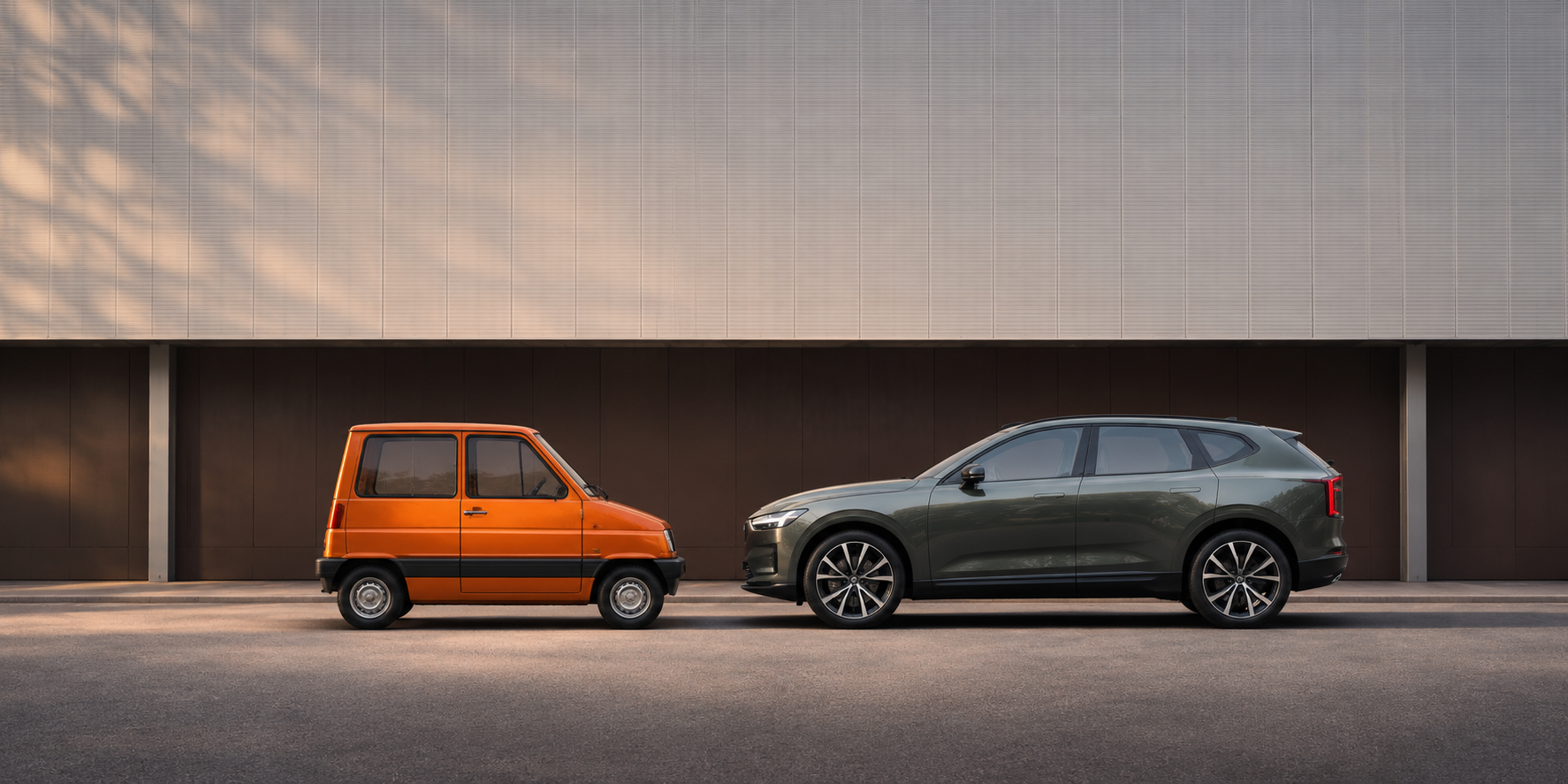
Long before electric cars became a familiar sight on British roads, Volvo was experimenting with battery-powered motoring. In November 1976, the Swedish manufacturer unveiled this rather adorable little orange hatchback, known as the Volvo Elbil. Fifty years later, Volvo is celebrating the anniversary of its first electric car, and I must admit, there's something about its wonderfully boxy design that makes me wish they'd build a modern interpretation of it.
With its tiny wheels, upright windows and bright orange bodywork, the Elbil wouldn't look particularly out of place among some of the retro-inspired electric city cars arriving today. Its performance figures, however, tell a rather different story.
Volvo's first electric car arrived in 1976
Only two examples of the Volvo Elbil were built. The orange four-seater was accompanied by a butter-yellow, two-seat delivery vehicle with a sliding door, developed with financial support from the Swedish government for Televerket, Sweden's former state-owned telecommunications authority.
The delivery vehicle was intended for short journeys around Gothenburg, where its modest electric range and lack of tailpipe emissions made it an interesting proposition for urban transport.
Power came from a 9.5kW electric motor producing around 13hp, with twelve six-volt lead-acid batteries providing a range of approximately 31 miles. Charging took ten hours and the little Volvo had a top speed of 43mph.
Volvo even experimented with lightweight materials, using glass-fibre-reinforced plastic for the bonnet and tailgate, alongside aluminium doors and roof panels. Despite these efforts, the Elbil still weighed 1,200kg.
From 31 miles to more than 500
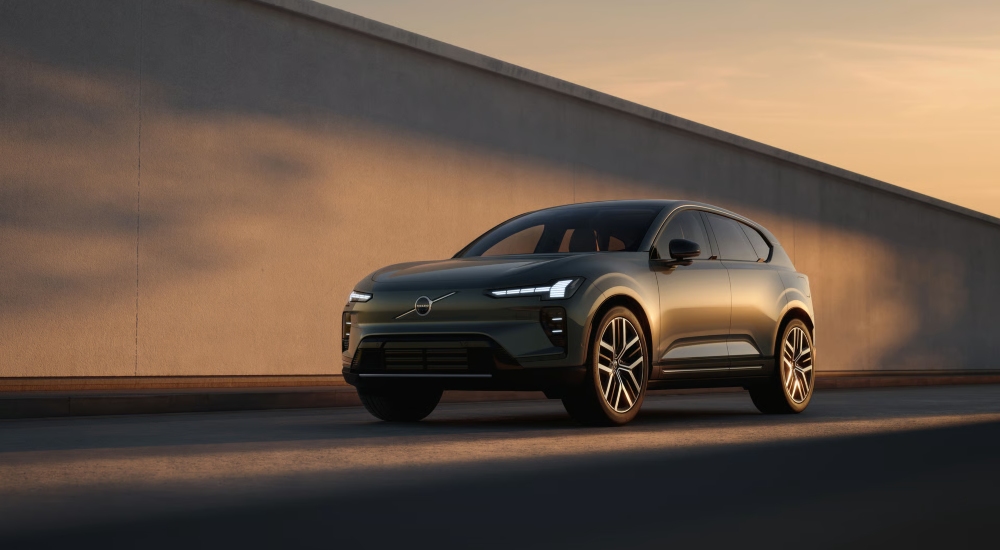
Perhaps the most interesting way to appreciate the Elbil is to compare it with Volvo's latest electric SUV, the EX60, which recently won Carwow's Car of the Year 2027 award.
The Volvo EX60 P12 AWD has a preliminary WLTP range of just over 503 miles, produces 680hp and can accelerate from 0-62mph in 3.9 seconds. Volvo also says it can add up to 211 miles of range in ten minutes when connected to a suitable 400kW rapid charger.
To put that into perspective, the EX60 can potentially add nearly seven times the Elbil's entire driving range in ten minutes. The original car needed ten hours to recharge.
Volvo Elbil vs Volvo EX60: 50 years of electric motoring
| Specification | Elbil (1976) | EX60 P12 AWD (2026) |
|---|---|---|
| Power | 13hp | 680hp |
| Battery capacity | 4.3kWh | 117kWh |
| Driving range | 31 miles | 503 miles* |
| Top speed | 43mph | 112mph |
| 0-62mph | Not available | 3.9 seconds |
| Charging time | 10 hours | 19 minutes (10-80%) |
| Kerb weight | 1,200kg | 2,330kg |
| Drive system | Rear-wheel drive | All-wheel drive |
*The EX60's range is a preliminary WLTP figure. Actual driving range and charging performance will vary depending on conditions. The Elbil's historical range predates modern WLTP testing.
Some things haven't changed at Volvo
Despite the enormous differences in technology, there are some familiar Volvo characteristics in the original Elbil. Every seat was fitted with a three-point seatbelt, a technology Volvo introduced as standard in 1959, while its distinctive orange paintwork was chosen to make the vehicle more visible.
The EX60 continues that focus on occupant protection with Volvo's multi-adaptive safety belt, designed to tailor its protection to the individual occupant and the circumstances of a collision. The new SUV also introduces Volvo's SPA3 electric vehicle architecture, incorporating cell-to-body battery technology and large-scale casting techniques to improve the way the vehicle is constructed.
Could the Volvo Elbil inspire a modern electric city car?
As impressive as the EX60's figures are, it's the little orange Volvo that I keep coming back to. There's a simplicity to its design that I find particularly appealing, especially at a time when so many new cars are becoming larger, heavier and increasingly complicated.
With Renault bringing back the Twingo and Fiat embracing small, characterful urban vehicles with the Topolino Dolcevita, I can't help but wonder whether there might be room for a modern-day Volvo Elbil.
Imagine those wonderfully angular proportions, a contemporary electric powertrain and Volvo's modern safety technology in a compact, affordable city car. I'm certainly not suggesting Volvo has plans to build one, but wouldn't it be rather lovely if it did?
Photography: Volvo Cars Media.