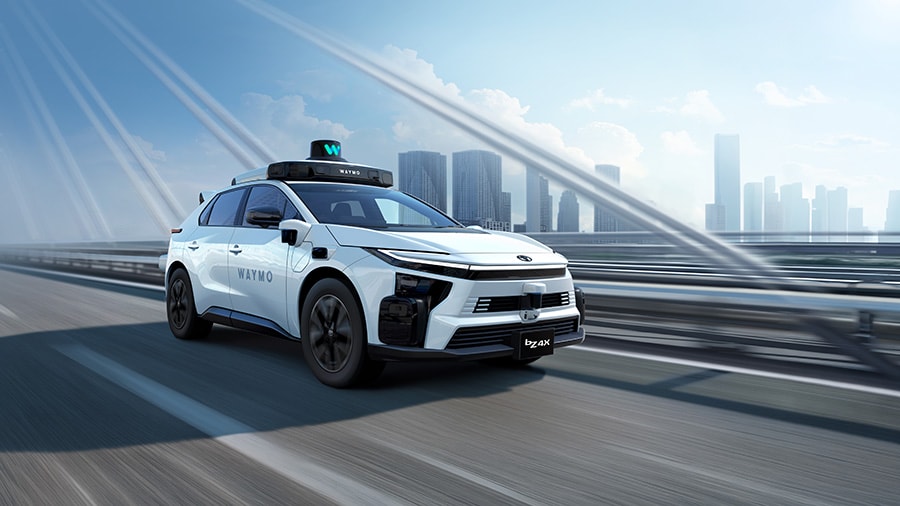
Toyota and Waymo are preparing a fleet of autonomous bZ4X electric cars that will begin testing in Japan in 2027, with the UK and other Waymo markets expected to follow. On the surface that sounds like another self-driving car announcement, but there is an important difference here: Toyota says the vehicles and Waymo hardware will be integrated at its Takaoka plant, rather than assembled as one-off technology demonstrators somewhere away from normal vehicle production.
That is what makes this interesting to me. Autonomous cars have spent years being shown as prototypes, often covered in sensors and accompanied by bold claims about how quickly they would transform our roads. Toyota and Waymo are now talking about something much closer to industrialisation, using a mass-market electric SUV as the basis for a Level 4 ride-hailing vehicle and building the necessary hardware into the manufacturing process.
What have Toyota and Waymo actually announced?
Toyota says it will produce specially prepared bZ4X vehicles for Waymo's autonomous ride-hailing service, with validation and testing due to begin in Japan during 2027. The cars will be fitted with Waymo's autonomous driving technology at Toyota's Takaoka plant, bringing the vehicle build and the additional self-driving hardware together under one roof.
The bZ4X itself is also being adapted for ride-hailing use rather than simply having sensors bolted onto a normal retail car. Toyota has highlighted features such as automatic doors, a powered tailgate and additional interior lighting, which sounds mundane next to the autonomous technology but is exactly the sort of detail that matters when a vehicle is expected to collect passengers without a conventional driver.
Why use the Toyota bZ4X?
An electric SUV makes a lot of sense for this type of service. It offers a relatively high seating position, useful passenger space and a flat, flexible platform, while an electric drivetrain suits the stop-start nature of urban ride-hailing. It also gives Toyota and Waymo a vehicle that is already designed to be manufactured in meaningful numbers rather than a bespoke autonomous pod that needs an entirely separate supply chain.
There is another advantage in using something recognisably car-like. People are being asked to trust a vehicle with no human driver, so familiarity matters. A Toyota SUV may feel less alien to a first-time passenger than a futuristic shuttle, even if the technology underneath is doing something completely different from the bZ4X most owners would buy from a showroom.
When could autonomous Toyota bZ4Xs reach the UK?
Toyota has said the UK is one of the markets planned to follow the initial Japanese programme, but it has not given a firm British launch date for the bZ4X fleet. Waymo is already testing its technology in London with trained specialists behind the wheel, using Jaguar I-PACE vehicles while it prepares for a future commercial service.
That distinction is important. Waymo is not currently offering a fully autonomous commercial ride-hailing service in London, and UK regulation is still moving through the stages needed to support wider deployment. The government has created a framework for pilot services, but this is not yet a situation where you can open an app in Britain today and summon a driverless Toyota.
What does Level 4 autonomous driving actually mean?
Level 4 does not mean a car can drive itself anywhere, in any weather, on any road. It means the vehicle can operate without a human driver within a defined set of conditions and locations, often described as its operational design domain. Within that area the system is responsible for the driving task, but outside it the vehicle may not be permitted to operate autonomously at all.
That is a much more realistic way to think about autonomous vehicles than imagining every privately owned car suddenly driving itself from Brighton to the Highlands. Ride-hailing fleets can be introduced city by city, mapped carefully and monitored centrally, which gives the technology a controlled environment in which to prove itself.
Why this partnership matters more than another prototype
The bit I keep coming back to is manufacturing. Toyota is one of the largest vehicle manufacturers in the world, and Waymo has spent years developing autonomous driving software and building real-world operating experience. Combining those two strengths could make deployment much easier to scale if the technology, regulation and economics all line up.
It also suggests autonomous driving may arrive first as a service rather than as an option on the family car you buy. That makes sense to me. A professionally managed fleet can be maintained, cleaned, monitored and updated in a way that millions of privately owned vehicles cannot, while the business can decide exactly where and when the autonomous system is allowed to operate.
Would I get into a driverless bZ4X?
I would, although I would probably spend the first journey watching what the car was doing far more closely than I would with a human driver. The technology has to earn trust through boring, predictable behaviour rather than clever demonstrations. How it deals with cyclists, pedestrians, roadworks, aggressive drivers and the general chaos of a busy British city will matter much more than whether it can complete a carefully selected showcase route.
That is why the Toyota partnership is worth watching. If these cars move from prototypes into a properly manufactured fleet and then into a regulated London service, it will be one of the clearest signs yet that autonomous vehicles are shifting from an engineering experiment into something ordinary people might actually use.