There are cars that become famous because they are fast, beautiful or expensive, and then there are cars that become important simply because millions of people choose to live with them. The Toyota Corolla sits firmly in the second camp. It turns 60 in 2026, and Toyota says more than 57 million examples have now been sold around the world across 12 generations, making Corolla the best-selling car nameplate in history.
That number is impressive on its own, but what interests me more is how the Corolla has managed to stay relevant for so long. It has never relied on one dramatic reinvention or a single defining body style. Instead, Toyota has kept moving it with the market, changing everything from the layout and engines to the technology, safety systems and even the name used in Europe, while keeping the basic promise of an affordable, dependable and practical car intact.
It started as Toyota’s idea of a car for everyone
The first Corolla arrived in Japan in November 1966 after appearing at the Tokyo Motor Show. Toyota’s brief was straightforward: build a high-quality, versatile car at a price ordinary buyers could reach, but make it feel more modern and better equipped than the basic transport many people were used to at the time. The original two-door saloon used a 1.1-litre engine, while four-door, estate and sportier Sprinter versions quickly followed.
Some of the equipment sounds completely ordinary now, but features such as a floor-mounted four-speed gearbox, disc brakes, bucket seats and multi-point seatbelts helped the early Corolla stand out. Within three years it had become Japan’s best-selling car, which set the pattern for what came next: gradual, constant improvement rather than chasing novelty for the sake of it.
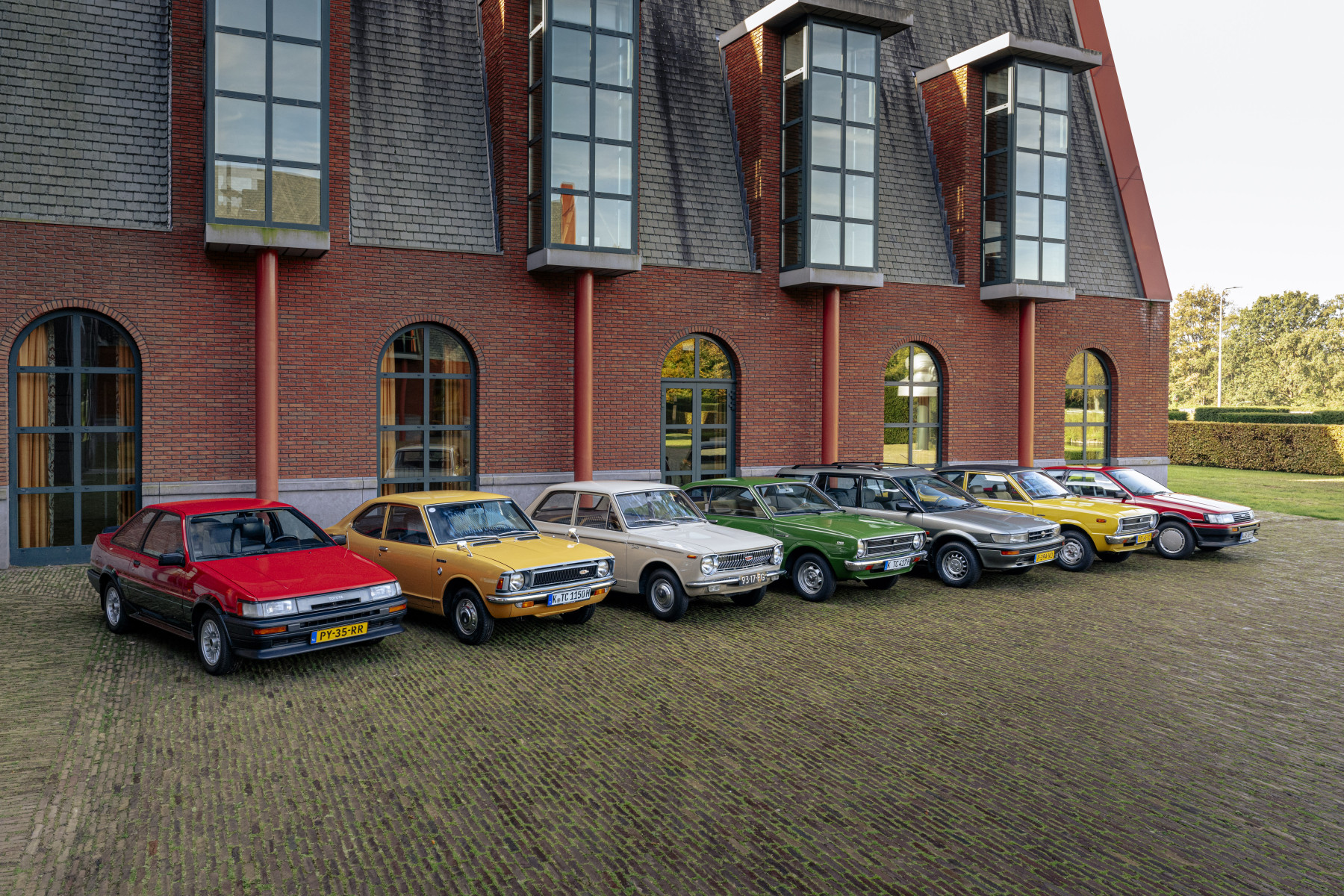
Twelve generations of changing with the times
Looking across the generations is almost like looking at a condensed history of the mainstream car industry. The second-generation Corolla arrived in 1970 with more comfort and safety equipment, while the third generation was developed using wind-tunnel testing and introduced more serious passive safety features. By the fourth generation, fuel economy had become a bigger concern and Toyota added a diesel engine; in the fifth generation, front-wheel drive arrived for the mainstream models while rear-wheel drive was retained for sportier versions.
That fifth generation also gave us the AE86, probably the one Corolla that even people with very little interest in sensible family cars recognise. Its front-engine, rear-wheel-drive layout and high-revving 1.6-litre 4A-GE engine turned it into a cult driver’s car, and its later fame through drifting and Initial D made it part of car culture far beyond the usual Corolla audience.
The following generations became more refined, more aerodynamic and more focused on European tastes. By the 1990s Toyota was putting greater emphasis on cabin quality, safety and local development, while the eighth generation marked a shift towards models designed specifically for different regions rather than treating every Corolla as exactly the same global car.
The Auris years were still part of the Corolla story
For UK buyers, the history becomes slightly less obvious in the late 2000s because Toyota replaced the Corolla hatchback name with Auris in Europe. The tenth and eleventh generations were therefore sold here largely as Auris models, although the Corolla name continued elsewhere. That period was still important because it brought hybrid technology into the heart of Toyota’s European family-car range.
In 2010, the Auris Hybrid became the first Toyota hybrid vehicle to be mass-produced in Europe, built at Toyota Motor Manufacturing UK in Burnaston, Derbyshire. In hindsight, that was a significant moment. Hybrid power is now one of the things most closely associated with Toyota, and the technology that felt unusual in a family hatchback 16 years ago has become completely mainstream.
Corolla returned to Britain in 2019
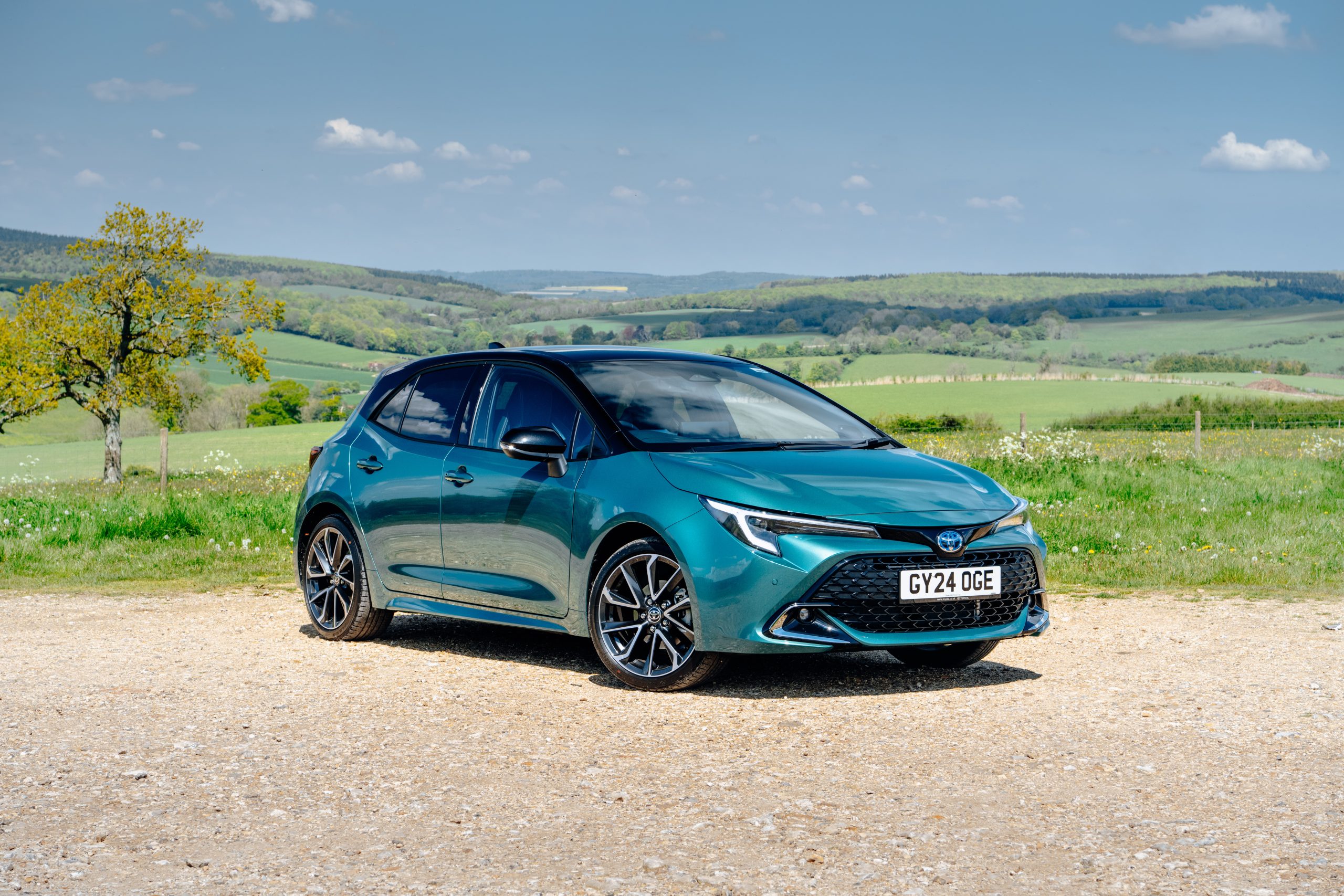
The Corolla name returned to the UK with the 12th generation in 2019, offered as a Hatchback, Touring Sports estate and, in some markets, a saloon. In Europe it arrived as a hybrid-focused model using Toyota’s TNGA platform, with a lower centre of gravity and stiffer structure than before. The latest range continues with 1.8 and 2.0-litre hybrid systems, while the wider Corolla family has also grown to include the Corolla Cross SUV.
Britain remains an important part of the story. Toyota’s Burnaston plant has built Corolla and Auris models since 1998 and today produces Corolla Hatchback and Touring Sports models. Toyota says almost 9.5 million Corollas have been sold in Europe, roughly one in six of the global total, which makes the model much more than a distant Japanese success story.
A 60th Anniversary Corolla for 2026
Toyota is marking the anniversary with a limited-run 60th Anniversary Corolla Hatchback, built in Britain and finished in an exclusive Boreal Blue metallic colour with an Eclipse Black roof and pillars. It also gets unique 17-inch alloy wheels, matt silver exterior details, anniversary decals, branded scuff plates and matching interior trim.
The anniversary model uses the 1.8-litre hybrid system, producing 138bhp, and comes with the sort of equipment that shows just how far the Corolla has travelled from that original 1966 car. There is a 12.3-inch digital driver display, a 10.5-inch Toyota Smart Connect+ touchscreen, connected navigation and a broad suite of Toyota Safety Sense driver assistance systems. None of that is particularly exotic by 2026 standards, but that is almost the point: the Corolla has survived by making useful technology normal and accessible rather than trying to be a technological showpiece.
Why has the Corolla lasted when so many names disappeared?
I think the answer is consistency. The Corolla has not always been the most exciting car in its class, nor has it tried to be. Toyota has repeatedly concentrated on the things that matter to a very large number of buyers: reliability, sensible running costs, comfort, practicality and a feeling that the car will simply get on with the job. When customer expectations changed, the Corolla changed with them, but rarely so dramatically that it abandoned the people who already understood what it stood for.
There is also something refreshing about a car name surviving for six decades without needing to become an SUV-only sub-brand or a premium lifestyle product. Across those 12 generations there have been saloons, hatchbacks, estates, coupes, vans, hybrids and performance versions, yet the basic idea has remained recognisable. Even the stranger chapters, such as the Auris name in Europe or the AE86 becoming a drifting icon, feel like branches of the same family tree.
What comes next?
Toyota has already shown a Corolla Concept at the 2025 Japan Mobility Show, suggesting the company is thinking about how the name can evolve again as buyers move towards a wider mix of electrified powertrains. The concept is deliberately flexible rather than tied to one propulsion technology, which feels very Toyota: keep options open, watch what customers actually need, then build the car around that.
Sixty years and more than 57 million cars later, the Corolla’s greatest achievement may not be that it became the world’s best-selling nameplate, but that it managed to do so without losing sight of its original purpose. It has changed enormously since 1966, yet it is still trying to be a dependable, accessible car for ordinary people. That might not make for the most dramatic automotive story, but it is one of the most successful.
Source: Toyota (GB) media information, published 26 October 2026. Hero image supplied by Toyota for editorial use.